Showing posts with label Prog-Rock. Show all posts

Friday, 1 May 2026

Träumen in der Morgendämmerung

Träumen in der Morgendämmerung
A Journey Through the Pastoral Psyche of German Progressive Folk

What will you do, God, when I die? 
I am your jar (if cracked, I lie?) 
Your well-spring (if the well go dry?) 
I am your craft, your vesture I— 
You lose your purport, losing me. 

When I go, your cold house will be 
Empty of words that made it sweet. 
I am the sandals your bare feet 
Will seek and long for, wearily. 

Your cloak will fall from aching bones. 
Your glance, that my warm cheeks have cheered 
As with a cushion long endeared, 
Will wonder at a loss so weird; 
And, when the sun has disappeared, 
Lie in the lap of alien stones. 

What will you do, God? I am feared. 

Vineyard, pasture, old apple orchard, 
field that misses no spring, 
fig tree that even in ground as hard as marble 
bears fruit a hundredfold: 

Scent exudes from Your round branches. 
And You do not ask if I am watchful; 
fearless, dissolved in juices, 
Your depths rise quietly past me.

Rainer Maria Rilke (1875 – 1926) 
From: The Book of Monastic Life (1899) 
Translated by B. Deutsch, A. Yarmolinsky, and C.L. Cingolani 


“Träumen in der Morgendämmerung” (Dreaming at Dawn) is not merely a compilation; it is an invitation to drift through the mist-veiled landscapes of German progressive folk and kosmische music, where poetry, protest, and pastoral beauty merge in luminous harmony.

Opening with the melancholic introspection of Hölderlin’s “Waren wir”, the journey begins in the half-light of memory and reflection. From there, we set out with Witthüser & Westrupp, whose warm acoustic textures and gentle psychedelia in “Lasst uns auf die Reise gehn” encourage us to wander, spiritually untethered.

The spectral reverie continues with Bröselmaschine’s “Gedanken”, a raga-tinged meditation that blurs the lines between inner thought and outer space. Carol of Harvest follows with “Put on Your Nightcap”, an English-language lullaby draped in melancholic electric folk, further deepening the dream.


A playful interlude arrives in Ougenweide’s “Der Fuchs und der Rabe”, whose medieval folk-rock retelling of Aesop's fable injects whimsy and charm. Emtidi’s “Touch the Sun” then lifts us into celestial realms with crystalline vocals and synth-laced serenity, before Gila’s “This Morning” steers us into a darker, more experimental awakening; quietly intense and emotionally raw.

Zupfgeigenhansel’s “Es dunkelt schon in der Heide” roots us again in folk tradition, a haunting evocation of twilight fading into night. Hölderlin’s “Requiem für einen Wicht” follows, echoing with poetic gravitas, a lament not just for the small or forgotten, but for the fragile spirit of a fading era.

The penultimate stretch brings social commentary wrapped in theatrical funk-folk via Floh de Cologne’s “Sei ruhig, Fliessbandbaby”, a sharp yet playful critique of industrial life. Emma Myldenberger’s “Unter der Linden” then unfurls like an ancient ballad rediscovered, its winding woodwinds and modal melodies casting a spell of tranquil nostalgia.

Finally, Denise Krüger’s “Hier lebst du” offers a quiet conclusion; an intimate, grounded reflection on presence and place, sung as if whispered into the first light of dawn.

Together, these twelve pieces form a lucid, undulating soundscape; a dreamscape where the utopian visions, earthy harmonies, and poetic souls of 1970s German folk-prog commune. It is a world best entered slowly, with open ears and a quiet heart.

Thursday, 7 November 2024

An Bainise (2024)

A new Bohemian Budgie audio creation to get your chops around, to accompany the wedding. The autumnal colours of the design really go well with the folky vibe. It glows warmly like a candle flame. In fact, the colours were one of the stand out features of our great day, with no frosty intrusion from icy blues & greys, no garish high viz. Hopefully the album reflects that. A kind of homespun simplicity to anchor and dispel all the frenzy of the wedding preparations. 

An Bainise (Irish Gaelic for The Wedding) is a beautifully curated musical journey with a mix of traditional and contemporary influences, ideal for a thoughtful, reflective listening experience.

The cover art, with its autumnal floral wreath and evocative illustration of a playful rabbit herald (one of Arthur Rackham’s illustrations for Alice in Wonderland), sets a poetic and charming folkloric tone that matches the curated mood of the album. The inclusion of W.B. Yeats’ poem "Aedh Wishes for the Cloths of Heaven" suggests emotional depth and literary sensibility underpinning a sense of solemnity for the upcoming ceremony.

The tracklist indicates a diverse range of styles from folk classics like "Scarborough Fair" (Simon & Garfunkle), Celtic traditional ("Siúil A Rún" by Clannad), to more contemplative and intricate instrumentals ("Intermezzo in A" by Brahms, "Dr. MacInnes Fancy" by Iain MacInnes). There is a seamless blend of vocal and instrumental pieces, which creates a rich tapestry of sound that flows from acoustic folk to lyrical ballads, evoking faraway landscapes and stories.

Highlights include the haunting quality of "Is Trua Nach Bhfuil Mé in Éirinn" by The Bothy Band, the atmospheric storytelling of "You Rambling Boys of Pleasure" by Planxty, and the warmth of "Fisherman’s Blues" by The Waterboys. The presence of heartfelt modern folk-soft rock elements, e.g., Nick Drake’s "Time Has Told Me," adds to the album’s timeless feel.

Overall, An Bainise offers an invigorating yet intimate listening experience, perfect for a quiet evening or contemplative moments, reflecting a deep appreciation for Celtic and folk music traditions blended with poignant, literary overtones. The album likely balances fortifying and stimulating qualities, much like its namesake theme suggests.


Tuesday, 11 July 2017

Caravan: Winter Wine (1971)


Caravan are an English band from the Canterbury area, founded by former Wilde Flowers members David Sinclair, Richard Sinclair, Pye Hastings and Richard Coughlan in 1968. The band have not achieved much commercial success, but are considered a key part of the Canterbury scene, blending psychedelic rock, jazz and classical influences to create a distinctive progressive rock sound. The band reformed several times in the following decades, and Caravan still remain active as a live band in the 21st century, despite Coughlan's death in December 2013. Caravan are responsible for the definitive Canterbury Sound English prog- rock genre.

In the Land of Grey and Pink is Caravan's third album, released in April 1971 on Deram Records. Instrumentally, the music is dominated by David Sinclair's keyboard solos, and side two is taken up by a 22-minute suite of songs, "Nine Feet Underground". The cover features a Tolkien-influenced painting. The album was critically well received but was not a chart success, which led to frustration within the band and David Sinclair's departure. Nevertheless, it has remained in print and sold steadily, and been recommended by critics as a good introduction to the Canterbury Scene.

Caravan circa 1971: In The Land of Grey and Pink

Friday, 30 June 2017

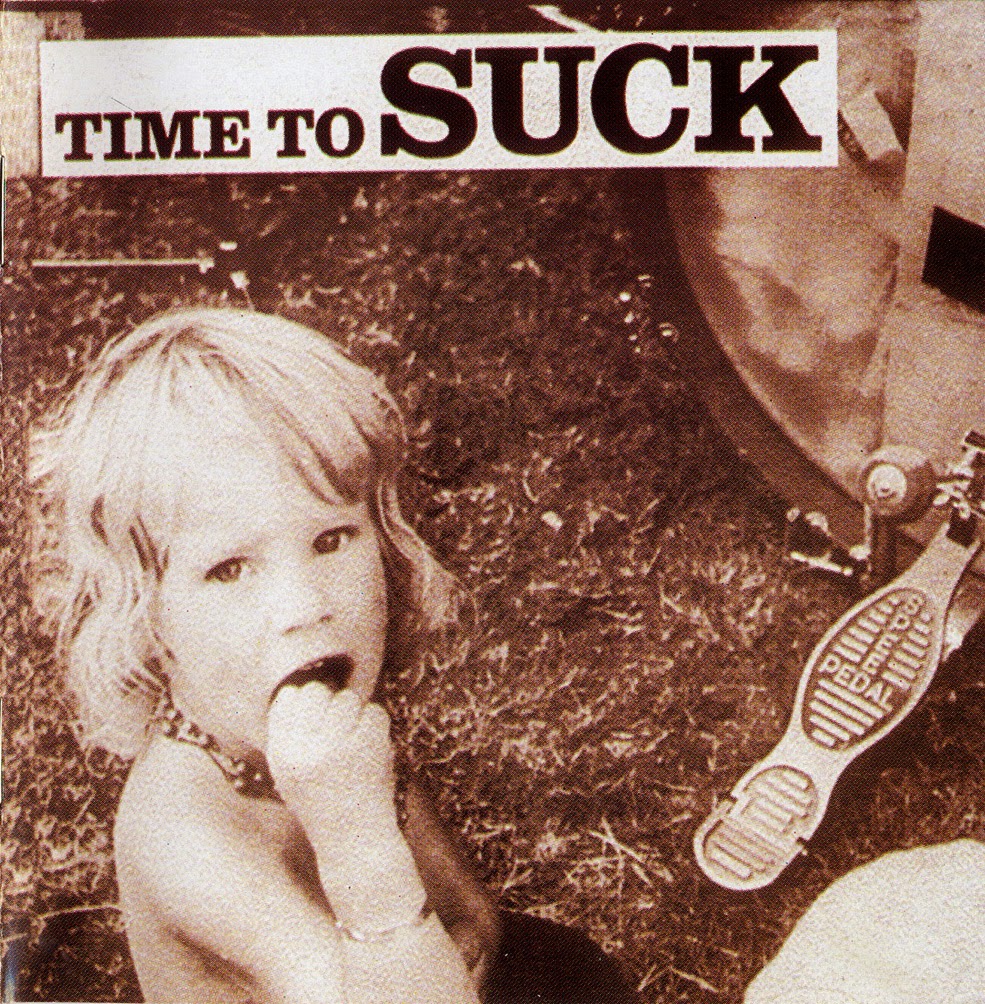
Suck: Season of the Witch (1970)


Suck were a rock band who were part of South Africa's first wave of hard rock titled, the "Big Heavies". The group lasted eight months between 1970 and 1971, during which they recorded their lone LP, Time to Suck. It was later released in America in 2009. Time to Suck is the first and only album by the South African hard rock band Suck. Released in 1970, it was recorded at the EMI Studios in Johannesburg in six hours. The album was initially only released in South Africa and France. The French edition's cover had the colours inverted. The first official CD release came in 2001 on Fresh Music with the bonus track "War Pigs". In 2002, a label called Progressive Line purportedly operating out of Australia released its own CD version of Time to Suck. German label Shadoks reissued it in 2009 on CD and vinyl, the first vinyl issue of the album since 1970.


Wednesday, 31 May 2017

Felt - World (1971)


Felt was formed in Alabama in the late '60s around the talents of Myke Jackson (guitars), Mike Neel (drums), Tommy Gilstrap (bass), Stan Lee (guitars), and Allan Dalrymple (keyboards). The band's self-titled album, released on the small Nasco label in 1971, contains half-a-dozen original songs written for the most part by Jackson.

The mostly blues-styled songs on this album are full of great guitar work and contain fine Beatles-esque harmony vocals. While most of this album has a blues feeling to it, some of the songs hint of progressive rock with swirling keyboards, intense drumming, and blistering guitar solos. The album has recently been discovered for its musical excellence and has become a very rare collectors' item.


Guitarist Lee would later go on to become a member of punk band the Dickies in the late '70s. This welcome re-release by Akarma Records features a reproduction of the original foldout album graphics in the mini-LP-styled Akarmapack.

by Keith Pettipas from Rockasteria

Saturday, 31 December 2016

Wishbone Ash- Pilgrimage (1971)


Good album for a wintry day. Pilgrimage is the second studio album by the rock band Wishbone Ash. The album focuses more on folk and acoustic music as opposed to the blues rock sound that dominated the first album. The album also contains an instrumental jazz workout ("Vas Dis") which (apart from sounding a bit too much like Vas deferens for my comfort) reminds me a bit of early Gong, and a four-part harmony vocal track in the spirit of Crosby, Stills, Nash, and Young ("Valediction"). The album sold well, reaching no.14 in the UK charts, but the band would reach their creative and commercial peak with their next studio release, Argus.


Tracklist:
1. Vas Dis 00:00
2. Pilgrim 04:45
3. Jail Bait 13:19
4. Alone 18:05
5. Lullaby 20:29
6. Valediction 23:33
7. Where Were You Tomorrow (Live) 29:53
8. Jail Bait (Live) 40:19

At the time, Wishbone Ash comprised of band members:
Bass, Vocals – Martin Turner
Drums – Steve Upton
Engineer – Martin Birch
Guitar, Vocals – Andy Powell, Ted Turner


Producer – Derek Lawrence
Engineer – Martin Birch

Recorded at the De Lane Lea Studios, London in May, 1971
"Where Were You Tomorrow" recorded live at De Montfort Hall, Leicester on June 14, 1971

Released September 1971 by Decca/MCA.


North Utsire

Tuesday, 25 October 2016

Farm (album, 1971)


Tasty rural boogie blues rock with Crazy Horse influences, this lone album from Illinois’ sextet Farm is an air-guitarist’s delight. Intricate, dual guitar interplay is the order of the day, with lots of meandering solos full of those West Coast druggy vibes. If you’ve worn out all your bootleg outtakes of David Crosby and The Pure Earth Rock and Roll Orchestra’s Wally heider sessions, then this is the next logical step for your musical mind expansion.


Members: 
* Del Herbert (lead guitar),
* Gary Gordon (vocals, guitar, bottleneck guitar),
* Jim Elwyn (vocals, bass),
* Steve Evanchik (percussion, harmonica),
* Roger Greenwalt (keyboards),
* Mike Young (drums).

Tracks:
01. Jungle Song (instrumental)-
7:45
02. Let That Boy Boogie -
7:13
03. Sunshine In My Window  -
3:47
04. Cottonfield Woman  -
3:57
05. Statesboro Blues -
3:24 


"Formed in 1969, Farm was a band from Southern Illinois, whose bluesy, country rock style was very similar of that of The Allman Brothers, and Canned Heat. Recorded at Golden Voice Recording Studios in South Pekin, Illinois and released on a small (500 copy pressing) record label from Flora, Illinois, this Farm released a very obscure and rare album of heavy garage psych with fuzz guitars, congas, mouth harp, organ, bottleneck and timbales. They thank a certain George Leeman on the sleeve notes, as their friend and spiritual guide. The band disbanded in 1973."  *

* From Fuzz, Acid and Flowers: Comprehensive Guide to American Garage, Psychedelic and Hippie Rock (1964-75) by Vernon Joynson (Author) Borderline Productions 4th Edition (1997)

North Utsire

Sunday, 25 September 2016

Free: Fire & Water Live in Sweden (1970)


I was really hoping to post up the full Free album Fire & Water. Its ideal for a Sunday morning when you're ambling around the morning after the night before, scratching your nuts, rearranging crap on the coffee table pretending to get organised. Well, you know Youtube. Seems like that was too tall an order to breach precious copyright rules, so instead I got a copy of Free performing live at Radiohuset, Stockholm, Sweden in 1970. On the surface of it, the performance is less polished and somewhat more stoned than the studio version, but it really works. There are a couple of tracks on the playlist which are not on the album either (The Stealer, Riding On A Pony, Woman), plus a bit of preamble. I love both versions. But then Youtube go pull the Radiohuset version too. Don't you just love the free world. 


Track List & Timings:
00:00 The Stealer
04:13 Fire And Water
08:39 Riding On A Pony
13:50 Heavy Load
20:08 Woman
25:00 I Love You So
31:00 Be My Fraind
37:15 Mr Big
44:24 All Right Now


North Utsire

Saturday, 13 August 2016

Grannie (1971)


Here’s another album all but lost in the depths of time until rediscovered circa 1993, and re- released by Wooden Hill in 2010. It’s been described as "guitar-dominated heavy progressive" but I disagree. Its more like a connosieur blend of psychedelic prog- rock, reminiscent of Uriah Heep and Iron Maiden, with a hint of Led Zep thrown in. They seem to defy definition, but are undeniably British psych- rock:

“Very cool music that screams London underground at the turn of the 60's into the 70's. Too bad the production isn't cleaner. If you like T2, Clear Blue Sky, Fuzzy Duck, Hard Stuff, Pink Fairies etc you'll dig it.”


In 68/69, guitarist Phil Newton saw an advert in Melody Maker for an all-inclusive deal at David Richardson’s SRT (sound recording technology) business that offered 8 hours of studio time, a master tape and 99 finished LPs for £100. In 1971 the band booked SRT (established as Sky Studios in 1968) and within 8 hours had recorded the full album - mainly for themselves, plus gigs/friends and family. Incredibly, no copies were sent to major labels/impresarios, and only 99 copies were ever pressed. The band began to play on the London club circuit at venues like The Greyhound, The Marquee and even the Roundhouse. They had a residency at the Speakeasy in London, but had their gear & music equipment stolen whilst traveling (including one of the first Mellotrons). Which put an end to things. Bloody shame.


Some random 70's dude with a Mellotron to his left

The recording quality is not brilliant, but given its with us at all is nothing short of miraculous. In its December 2004 edition 'Record Collector' valued an original vinyl pressing of the album at £850.

Tracklist

Leaving
6:35
Romany Refrain
4:12
Tomorrow Today
7:10
Saga Of The Sad Jester
4:36
Dawn
5:12
Leaving
6:35

Lineup

Bass 
Dave Holland
Drums 
Johnny Clark
Flute 
Jan Chandler
Keyboards 
John Stevenson (tracks: B3)
Lead Guitar 
Phil Newton
Producer 
Dave Richardson (2)
Vocals 
Dave Holland, Fred Lilley, Jan Chandler, Phil Newton


North Utsire

Monday, 14 March 2016

Cailleach of the Diamond Night Moon: Album Artwork


Another album LeStrange of strangely strange sounds & goblin fiends. Would love to post it up entirely. Instead, below is a bit of Turid who is featured on the compilation. Marit Turid (better known as just Turid), is a Swedish ballad singer (vissångerska), composer, lyricist and musician (piano , guitar). She's done 8 studio albums throughout the 70's and early 80's but most people haven't hear of her. She's too good to be 'famous'. Which is kind of the theme of this foggy acid folk album.


North Utsire

Saturday, 6 February 2016

Stacia

It was a great shame to hear of the passing of Lemmy last month. In truth, it’s a wonder to me how he lasted as long as he did. Such is the stuff of legend. Of all the tributes that mentioned the brilliance of his alma mater & first true love Hawkwind, I didn’t hear anyone mention probably the most interesting character of the band: Stacia!


Stacia was an interpretive dance artist, over 6 feet tall (some say 6’2”), on stage often covered in the obscure grease paint of exotic symbols, moving like a gyrating psychedelic skin canvas on a space mission. That is, when she was dressed at all. Her bacchanalia was legendary enough to match that of the band members, who held her in high regard by all accounts.

The exact circumstances of her arrival in Hawkwind are unclear, but it is agreed that after she started dancing for the band in 1971 she became a central part of their live performances, and their artwork. Stacia was pictured in the iconic ‘Space Ritual’ fold out sleeve designed by Barney Bubble. Starting in 1971, she carried on through to 1975, so this included the Space Ritual years I mentioned in my blog of Aug 2015. Liner notes to the album In Search of Space (1971) indicate that poet and lyricist Robert Calvert recruited her for live shows, but Stacia herself stated in Melody Maker that she attended a show and, inspired by the music, got on stage and performed an impromptu dance to the band's music. Interestingly, she received no formal dance training after being kicked out of ballet class for being too tall. It was all just natural stoned groove.

Barney Bubble's Rendition of Stacia

Nik Turner (saxophonist and flautist for the band) fills in a bit more detail in Mojo Magazine in a 2012 interview; "I met Stacia for the first time at the Isle of Wight... She said, "Can I dance with you?" and I said, "Yeah, but you must take off all your clothes and paint your body." She took all her clothes off but unfortunately I didn't have any body paint. That was like her audition." In the 2007 BBC Four documentary (clip above), Lemmy said that she was working as a bookbinder before she joined the band, and others that she was a petrol pump attendant in Cornwall.

Jason Schafer, in his Dangerous Minds article entitled Stacia, Hawkwind’s Buxom cosmic Dancer Discusses Her Wild Sex Life in Vintage Interviews says:

I was checking out a Hawkwind fan site the other day when I came across a couple of interviews with the busty performer, both from 1974. The first one to catch my eye was from Penthouse and was entitled “Long, tall Stacia – the six foot lady with the two-way sex life.” The other, simply titled “Stacia, the girl in the band” came from the August 3rd edition of Record Mirror. Stacia comes off as a total badass in both, as I would imagine that you’d have to be to hang with the likes of Lemmy Kilmister all day long.


Actually very little is known publicly about Stacia beyond those two 1974 interviews and a smidgen derived from a 2010 Sunday Times retrospective entitled Time and place: Stacia Blake. Most of them go on about her bisexual propensities, onstage nudity, and prolific drinking habits as though they were the utmost in wanton debauchery. Things that nowadays, unless you live under Puritan Rock, are actually quite tame. Funny it’s always the ones who have the strict religious upbringing that go on to break all the taboos. Stacia was from a religious Catholic background. "My sisters didn't mind the nude bit, but my parents weren't too keen until I gave it up. Then my mother really got into the band - my aunts have even turned up at gigs. We're a Catholic family y'know, although I'm not religious."

From the interviews, we do find out about her relationship with then boyfriend Arthur Kane from New York Dolls, her girlfriend Ingrid, some thoughts about fans and her take on Women’s Lib: Stacia was 21 at the time (“I’m still a kid”), and lived in Earls Court with two men, two other girls, and two budgerigars. Well, had to mention the budgerigars. It is the Bohemian Budgie after all.

I lived in a basement flat at No14A Steeles Road, in Hampstead, northwest London, between about 1971 and 1975. I had lived at various addresses in London after moving from Ireland, including a squat in Camden, but Steeles Road was the place I was in for longest. I lived there with Roy Dyke, who became my husband and was the drummer in the rock band Ashton, Gardner and Dyke. I had my daughter, Aysha, while we lived there. I can’t remember how much the rent was, or even if we paid any. It was two rooms, a bedroom at the back and a tiny little kitchen off the hall. You couldn’t swing a cat in it. Being a basement flat, it was very damp.
Time and place: Stacia Blake
Sunday Times, 2010

Someone likened her to Dracula's aunt. 

Hawkwind, being a "weird" band, pull some "weird" crowds, especially in America where Stacia is constantly hounded by both male and female groupies. One lunatic even tried to murder her during a gig and she wasn't dancing naked at the time!


"I was doing a mime of a robot who was given a pill and becomes human for a spell. I was freakin' out at the time, and I felt this choking sensation round my neck. People thought it was a guy hugging me at first which was cool, but a roadie saw that he was strangling me and he threw the bloke off the stage.

"He even had a go at me a second time," recalls Stacia, "and the hall bouncers beat him up and threw him out. I was really shaken, and I wasn't much good for the rest of the tour."

"When we made Silver Machine we attracted a Top 20 audience of filthy little boys who came along to stare at me." There is a hint of bitterness in her voice.

That was a couple of years ago. Since then the band have developed, and Stacia dances naked no more. She has nine different costumes to choose from, and the dirty little boys have disappeared from the audiences. Ironically the reaction was pretty "cool" when she first appeared in her birthday suit: "Most people weren't surprised, because I don't think Hawkwind could surprise anybody. They get into so many weird things."

From Stacia, the girl in the band
Record Mirror, 1974

I love the way Stacia turns a murderous double assault into an opportunity to design a clutch of psychedelic outfits to dance in. Irrepressible genius. It speaks volumes.


Stacia’s 1975 departure must've come as a bit of a hammer blow to Hawkwind and fans, coinciding as it did with the simultaneous loss of Lemmy (to Motorhead) and Robert Calvert. Whatever happened on the preceding Warrior on the Edge of Time tour to precipitate this is anyone’s guess, but I’m expecting grueling tours, groupies, drugs, ennui, and complete mental and physical burnout would come high on the list.

After leaving Hawkwind, Stacia returned to private life and married Roy Dyke. As former Hawkwind manager Doug Smith said in the October 2000 issue of Classic Rock magazine, "The last anybody heard, Stacia was married with children and living in Hamburg with her husband Roy Dyke, formerly of Ashton, Gardner and Dyke." The couple has a daughter, Aysha Dyke, who lives in Hamburg and is currently in the band Generations of Music.


Stacia is now living in Ireland and working as an accomplished artist. She has said about her work: "It is greatly influenced by my love of nature, in all its aspects. Landscapes, people, animals, sound and movement. All these things permeate my being. I allow them to become part of me. After a time of reflection, all these impressions culminate in the creation of inner landscapes which are then released to create the images you see in my work." I have included a montage of Stacia’s artwork below, and may yet blog some more of it.
Stacia, the Girl in the Band. Record Mirror, 1974
Long, Tall Stacia – the Six Foot Lady with the Two-Way Sex Life. Penthouse, 1974
Hawkwind’s Buxom Cosmic Dancer Discusses Her Wild Sex Life in Vintage Interviews. Dangerous Minds.

North Utsire

Wednesday, 2 December 2015

Human Be- In (1967)


“Well,” said Alpert, “it’s a hell of a gathering. It’s just being. Humans being. Being together.”
“Yeah,” said Allen “It’s a Human Be-In.”

"From the outset the costumed people in the Haight-Ashbury did not seem to form simply a new Bohemia. Almost immediately I referred to them in my field notes as "costumed people," partly because I had not yet heard the term "hippie," but also because I recognized that they could not be easily classified, that they did indeed hear a different drummer, that the meaning of their drama was hidden from me. Nor did my immediate colleagues use the term "hippie" at that time. referring instead to "the young tourists" or "the acid-heads." A young social worker who worked at the Institute and lived in the Haight-Ashbury neighborhood immediately adjacent to the Medical Center initiated me into the use of the term "hippie," and I remember asking her to spell it for me when I finally realized that she was not using the older term "hipster." At about the same time as I began work, a long story appeared in the San Francisco Chronicle on a commune of "acid-heads," who lived in a large old house in a poor neighborhood, not too far from the Haight-Ashbury; the word "hippie" was not used in the story at all, although in another month- so swiftly did the term catch on- the local newspapers were generally using the term imprecisely for various costumed young people anywhere in the Bay area."

Elegantly uncostumed costume- people

"Thus the neighborhood was in many ways ripe for the events that took place in such intensity during the period of which I write. It included a population geared in many ways to  the young and to new ideas, in particular to the idea of one world. Its flexibility can be demonstrated by the very fact that throughout the winter and spring, in spite of the influx  of young people whose numbers increased at an almost unprecedented rate in the life of any city, the neighborhood became increasingly accepting. By June, various estimates were  made that about 15,000 young flower children were living in the neighborhood, and most of this growth had taken place within the space of a few months."

Ginsburg holding court

"Thus within the space of a very few weeks, the nature of my feeling about these young people changed drastically. Mistakes they made, but they recognized them; they were critical of themselves; and they were flexible. To my amazement, they read many of the books that I had read as an undergraduate over thirty years before- D. H. Lawrence, Freud, James Joyce, Aldous Huxley, for example; and well-worn copies of books by these authors were pored over in the Psychedelic Shop, which periodically seemed to operate mainly as a  library. Moreover, they were concerned about the problems of child-rearing practices in middle-class American society and were exploring alternative solutions, such as the kibbutz in Israel; such books as Melford E. Spiro's Children of the Kibbutz were regularly borrowed back and forth by members of the young community whether they were parents or not. Under their influence, I read some of the books that they liked but that I had never gotten  around to reading, although most of them were at least familiar titles to me; the Tolkien books are notable examples. I discovered the importance of these books for the young people. Although Tolkien has denied that he was writing an allegory about Western civilization and the fear of nuclear destruction, the hippies read his books as an allegory for  their time and position. The consistently good people in the Tolkien books are Hobbits and  they have the lowliest status of all the groups of characters in the books. The hippies  thought of themselves as being or becoming Hobbits; from time to time as the winter wore  on, a sign would appear in the window of one of their gathering places to this effect: Do not add to the street confusion this weekend. There may be busts. Be good little Hobbits and stay home. I came to understand that the hierarchy of status in the establishment was one  of the serious concerns of this coalescent group of young people. As a member of the  second sex and as a marginal person in my own professional world- whatever that is- I found this concern congenial to me. What I am suggesting here is that with the passage of a relatively short time and some openness to this young community, the stranger began to feel at home."
The Human Be-In
Helen Perry, 1970

Human Be-In Flyer

The above flyer is a rare piece of cultural ephemera and evocative of a certain era. Designed by Michael Bowen and Stanley Mouse it announces “A Gathering of the Tribes for a Human Be-In”. This watershed event catapulted the hippie scene to national prominence. Participants were asked to “Bring food to share, bring flowers, beads, costumes, feathers, bells, cymbals and flags.” That they did. These ideas transfixed mainstream culture, and the phenomenon of the “hippie” burst full force into the public consciousness, transforming a generation.

Human Be- In Poster (one of several)

As a prelude to the first Summer Of Love which made the Haight-Ashbury district of San Francisco a symbol of the American counterculture and introduced a suburban generation to the word “psychedelic”, the first Human Be-In in 1967 focused key ideas of liberation against the prevailing social norms of conventional middle-class commonality. Organiser Allen Cohen invited speakers on the day including Timothy Leary who set the tone with his famous phrase – “Turn on, tune in, drop out” and Allen Ginsburg who chanted his poetry. Janis Joplin, Jefferson Airplane and The Grateful Dead provided the soundtrack to gathered masses who participated in the consumption of “White Lightning LSD” provided by underground chemist Owsley Stanley. Incidentally Stanley designed some of the first high-fidelity sound systems, culminating in the massive and infamous amplification rig used by the Grateful Dead in their live shows.

Ginsburg chanting mantras

It’s estimated that between 20,000 and 30,000 people showed up. The event was seen by many as a meld between philosophically opposed factions of the San Francisco counterculture. One on side were the Berkeley radicals, who were tending towards increased militancy in response the the U.S. government’s Vietnam War. On the other side were the non-partisan hippies who urged peaceful protest. Although their means were drastically different, they held many of the same goals- personal empowerment, cultural and political decentralisation, communal living, ecological awareness, higher states of consciousness and liberal political consciousness. The happening was more than a war-protest. Authority was questioned on civil rights, women’s rights and spawned it’s own alternative media in the form of newspapers and radio stations as well as new directions in music, art and technology. The dynamic milieu of San Fransisco in the 1970s gave birth to the ultimate gesture of modern personal power – the personal computer, countering the prevailing main frame computer paradigm which implied centralised authority.

Humans being-in

“The predominant feeling among the Hippies from about 1965 through the summer of ’67 was that they were agents and witnesses of a dawning of a new age. An age in which the warrior spirit, that had vaulted western man to the domination and potential destruction of creation, would be dissolved in the spiritual transcendence of the saint. Ghandi and Martin Luther King were our heroes and we had turned to the rich heritage of Asian mysticism and metaphysics for our inspiration and our practice. We leaped across oceans and through time to pre-Christian mythologies like the American Indian, the Egyptian and the occult and pagan philosophies of Europe. We studied with Buddhists and Indian gurus, native shamans, witches and yogis. We turned from Aristotelian and Christian dualism to the four pronged logic of Vedanta philosophy. We studied the Upanishads, the Tao Te Ching, Alan Watt’s books on Zen Buddhism, and Hermann Hesse’s novels, especially Siddhartha. We wouldn’t leave the house without consulting the I Ching, or our Tarot cards or our astrological charts.”


“Were we being naive or superstitious? No, I think this was the most important and long lasting aspect of the 60s despite the backlash of the 80s. It was the beginning of a renaissance in thought and culture similar to the Renaissance that brought Greek and Roman images and ideas back to Europe in the middle ages. Ideas that eventually led to the end of the domination of the Catholic Church, the rise of the nation state, the rebirth of democracy and the development of science.”


"The Gathering of the Tribes" in a "union of love and activism" was an overwhelming success, Over twenty thousand people came to the Polo Fields in Golden Gate Park. The psychedelic bands played -Jefferson Airplane, The Grateful Dead and Quicksilver Messenger Service. Poets Allen Ginsberg, Gary Snyder, Michael McClure, Lawrence Ferlinghetti, Lew Welch, and Lenore Kandel, read, chanted and sang. Tim(othy) Leary told everyone to "Turn on, Tune in and Drop out", the Diggers gave out free food. The Hells Angels guarded the generator cables that someone had cut, Owsley Stanley gave out free acid; a parachutist dropped like an angel from the sky and the whole world watched on the evening news. Soon there would be Be-Ins and Love-Ins from Texas to Paris and the psychedelic and political aspects of the youth culture would continue to grow hand in hand everywhere." – Allen Cohen

"Turn In, Tune Out, and Drop One"

When will the next of the big free love- festivals be? 

North Utsire

Thursday, 5 November 2015

Autumn Colours


Autumn came in a choked fog of smothering grey
Retinas froze & fractured in patinas of old clay teapots
The trees came out in sympathy, 
Their lifeblood withdrawing from roots of cold Earth
Leaving only valiant crimson, browns and golds
As sepia reminders of glory breeze days and innocent glades
Not even the late Sun could persuade them to stay.
Bleached, hungry and withering now, their blades fell like wistful tears
Parchments of love letters to the humans remaining
Saying "We will meet again, one spring. Have faith"


North Utsire