Showing posts with label Film. Show all posts

Thursday, 15 January 2026

Hitchcock goes Gothic: Stoker (2013)

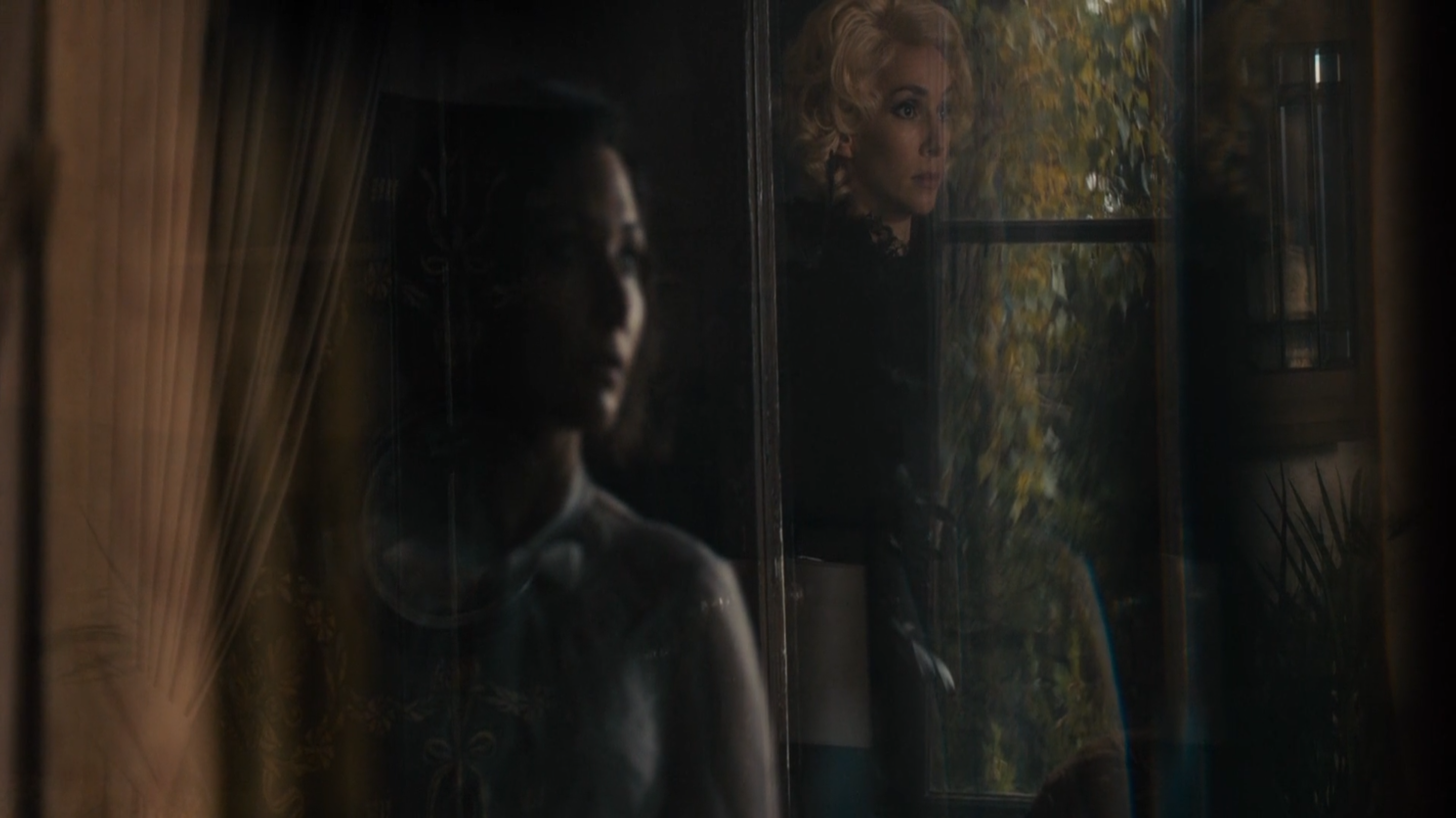
Good film for the winter break! Park Chan-wook’s Stoker (2013) is drenched in the eerie, simmering suspense that defined Alfred Hitchcock’s best psychological thrillers. While its surface may feel like a gothic coming-of-age story, the film is deeply rooted in Hitchcockian techniques; slow-burning tension, voyeuristic framing, twisted family dynamics, and a creeping sense of menace that lurks beneath polished exteriors. It’s a film that feels like a dark cousin to Shadow of a Doubt (1943), infused with the psychological complexity of Psycho (1960) and the hypnotic dread of Vertigo (1958). But rather than being a simple homage, Stoker takes Hitchcock’s blueprint and warps it into something even more unsettling, merging it with the deep shadows and doomed beauty of Gothic fiction.

From the start, Stoker builds tension not through explosive confrontations but through carefully controlled suspense. The protagonist, India Stoker (Mia Wasikowska), is a quiet, withdrawn teenager struggling with the sudden death of her father. Enter Uncle Charlie (Matthew Goode), a long-lost relative whose charm is as impeccable as his intentions are dubious. Hitchcock was a master of letting danger simmer beneath the surface, and Park follows suit; Charlie’s presence is both alluring and ominous, and every interaction is filled with an unnerving stillness. Like Joseph Cotten’s charming yet sinister Uncle Charlie in Shadow of a Doubt, Goode’s version exudes a calm, predatory patience, luring India into his web with an almost hypnotic control.

Nowhere is Hitchcock’s influence more evident than in the film’s exploration of family as a source of unease. Hitchcock had an enduring fascination with twisted family relationships; whether it was the suffocating bond between Norman Bates and his mother in Psycho, or the psychological control exerted in Rebecca (1940). In Stoker, India’s relationship with her mother, Evelyn (Nicole Kidman), becomes increasingly fraught as both women navigate the unsettling presence of Uncle Charlie. But it’s the relationship between India and Charlie that drips with the most Hitchcockian tension; a mix of seduction, manipulation, and an almost telepathic connection that borders on the supernatural. Like many of Hitchcock’s most memorable characters, India is not a passive victim but someone undergoing a transformation, embracing the darkness within her rather than simply fleeing from it.

This is also what makes Stoker deeply Gothic; not just aesthetically, but thematically. It channels the hallmarks of Gothic fiction: eerie mansions, twisted family secrets, psychological torment, and an overwhelming sense of fatalism. The Stoker estate is a grand, isolated house with shadowy corridors, labyrinthine spaces, and an atmosphere thick with repressed emotions. It’s a classic Gothic trope; the house as both a physical and psychological trap, much like Manderley in Rebecca or Thornfield Hall in Jane Eyre. It’s where dark secrets fester and where characters are slowly consumed by their own desires and fears.

Then there’s the film’s obsession with bloodlines and inheritance; not just of wealth, but of violence. India Stoker’s journey mirrors that of many Gothic heroines, caught in the web of her family’s disturbing past while awakening to her own unsettling nature. Like in Wuthering Heights or The Fall of the House of Usher, the past isn’t just a memory; it’s an inescapable force, shaping the present and dooming the future. Uncle Charlie himself is a classic Gothic figure: the seductive yet menacing stranger who arrives at a vulnerable moment, much like Max de Winter in Rebecca or Count Dracula in Dracula. He exudes charm and danger in equal measure, his presence both irresistible and deeply unsettling. His influence over India is not just psychological but almost supernatural in its inevitability; another key Gothic trait, where fate looms over characters like an inescapable curse.

Visually, Stoker mirrors Hitchcock’s signature use of space and framing to create psychological unease. Park employs voyeuristic compositions, isolating characters in the frame, positioning them just slightly out of sync with their surroundings, making them feel watched even when they are seemingly alone. The film lingers on silent, loaded glances, revelling in what is left unsaid. This is Hitchcock’s Rear Window (1954) voyeurism taken to a new extreme; India is both observer and observed, her transformation unfolding under our gaze like a slow-motion car crash. The film also shares Hitchcock’s love of suggestive symbolism, from the use of shoes as a visual metaphor for India’s evolution to the blood-like spattering of red that punctuates the film’s otherwise restrained colour palette.

At the heart of Stoker is Hitchcock’s signature theme: the duality of human nature. India is not a simple victim, and Uncle Charlie is not just a villain; there’s a shifting power dynamic between them that keeps the film teetering on the edge of eroticism and horror. Hitchcock loved characters whose surfaces betrayed little of the chaos within; James Stewart’s obsessive detective in Vertigo, Cary Grant’s morally ambiguous hero in Notorious; and Park plays with that ambiguity here. Matthew Goode’s Charlie is all charm and poise, but there’s something reptilian underneath, an echo of Anthony Perkins’ performance in Psycho; polite, smiling, and utterly untrustworthy.

While Stoker wears its Hitchcockian influences on its immaculately tailored sleeve, it never feels derivative. Instead, Park Chan-wook takes Hitchcock’s themes and dials them up, stripping away the veneer of restraint that characterized much of Hitchcock’s work. Where Hitchcock would imply, Park lingers. Where Hitchcock would cut away, Park watches. The result is a film that feels both familiar and alien, a love letter to classic suspense cinema that mutates into something even darker.

If The Wonder (2022) is a slow-burning meditation on belief and control, Stoker is its eerie cousin, exploring those same themes through the lens of psychological horror. Both films thrive on tension, lingering in the space between knowing and unknowing, between observer and observed. But where The Wonder ultimately seeks revelation, Stoker embraces the abyss, revelling in the Hitchcockian thrill of descent; only this time, with lace gloves and a funeral veil.


Tuesday, 1 July 2025

The Wonder (2022)

 The Wonder (2022), directed by Sebastián Lelio and based on Emma Donoghue’s novel, is a haunting, slow-burn psychological drama that grips you with its unsettling atmosphere and richly layered narrative. Set in 1862 Ireland, the film revolves around a young girl, Anna (Kila Lord Cassidy), who, it’s claimed, has not eaten for months yet remains alive and well, leading to widespread fascination and suspicion. A nurse, Lib (Florence Pugh), is sent to observe her, tasked with determining whether this is a miracle, a hoax, or something more sinister.

The beauty of The Wonder lies in its ability to create a sense of claustrophobia and tension from the simplest moments. The rural Irish setting, with its mist-covered fields and stark interiors, adds a weight to the already heavy atmosphere. Lelio’s direction is meticulous, focusing on the subtle interactions between the characters, while also drawing attention to the larger societal and religious forces that are at play in this small community. The cinematography is breathtaking, but it’s the sound design; the quiet creaks of a wooden house or the soft murmur of voices; that truly elevates the film’s sense of dread.

Florence Pugh delivers yet another stellar performance, embodying Lib with a quiet intensity. She brings depth to her character, whose own troubled past slowly unravels over the course of the film. Pugh’s subtle shifts in expression and her interactions with the villagers, particularly Anna’s mother (Elaine Cassidy), are riveting. It’s a performance that demands patience from the audience but rewards it with a deeply human portrayal of a woman searching for truth amid an ocean of superstition and fear.

The story’s central mystery; the “miracle” of Anna’s survival; raises poignant questions about faith, power, and the human need to control the uncontrollable. The Wonder doesn’t offer clear answers. Instead, it invites the viewer to reflect on the nature of belief and the lengths people will go to uphold it, even when faced with evidence to the contrary. The film’s pace is deliberate, requiring patience, but it’s also beautifully crafted, with each scene building toward a revelatory conclusion that is both satisfying and disquieting.

However, the film’s slower pace may be a point of contention for some. While the slow-burn tension works for most of the film, certain moments feel drawn out, and there’s a sense that some viewers may find themselves impatient for the story to move forward. The tension, though palpable, can sometimes feel as though it’s spinning its wheels before reaching its emotional payoff.

In the end, The Wonder is a film that demands reflection and a willingness to sit with its discomforts. It’s not a traditional mystery or thriller, but rather an exploration of human nature and the often dangerous grip that belief can have on people. With a standout performance from Pugh, evocative cinematography, and a story that lingers long after the credits roll, The Wonder is a meditative, unsettling experience that doesn’t give easy answers; but perhaps that’s exactly the point.


Sunday, 1 June 2025

Saint or Swindler? Wild Wild Country (2016) vs Osho The Movie (2022)

Few figures in modern spirituality are as controversial as Osho, and few documentaries are as diametrically opposed in their portrayal of him as Wild Wild Country and Osho: The Movie. One is a gripping exposé of power, deception, and unchecked ambition, the other is a carefully curated PR campaign disguised as a film. Watching them back to back feels like stepping into two entirely different realities; one where Osho is a megalomaniacal cult leader presiding over a criminal enterprise, and another where he is a peaceful sage tragically undone by his own followers. The only real question is: which one is selling you a bigger illusion?

Wild Wild Country, the Netflix documentary that took the world by storm in 2018, is an absolute rollercoaster of madness, crime, and spectacle. It doesn’t need to embellish because the real story is stranger than fiction. A charismatic guru moves his thousands of red-robed followers to a small Oregon town, builds a utopian city, and then; because utopian cities never go as planned; everything descends into wiretapping, arson, bioterror attacks, and assassination plots. It’s a documentary that unfolds like a thriller, letting a cast of ex-Rajneeshees, Oregon locals, and law enforcement officials piece together a story that keeps getting wilder by the minute. At its centre, though largely silent for much of the runtime, is Osho himself; his presence looming over every act of devotion, every shady legal manoeuvre, every whispered conspiracy. When he does finally break his silence, it’s to throw his once-loyal secretary Ma Anand Sheela under the bus in the most passive-aggressively divine way possible.

And then there’s Osho: The Movie, a film that seems to exist primarily to rehabilitate Osho’s image, or at the very least, to make sure no one blames him for anything. Here, he is the wise master, the enlightened rebel, the man too evolved to concern himself with petty things like immigration fraud or poisoning an entire town’s salad bars. If Wild Wild Country suggests Osho might have been complicit in the darker elements of his movement, Osho: The Movie insists he was just meditating while his empire crumbled around him. The film bends over backward to absolve him, casting Sheela as the power-hungry villain who took things too far while Osho, poor innocent Osho, simply wanted to spread his message of love. Never mind that he had a fleet of Rolls-Royces or that his movement collapsed in a spectacular mess of legal battles and criminal convictions; the film would rather you focus on his radiant presence and misunderstood genius.

The biggest difference between the two films is how they treat the moral complexity of the story. Wild Wild Country doesn’t hand you a simple answer. It acknowledges that many Rajneeshees were sincere seekers who got caught up in something far bigger than themselves, that Osho was undeniably charismatic and visionary, but also that the movement was riddled with corruption, cult-like behaviour, and outright criminality. It doesn’t tell you who to believe—it simply lays out the chaos and lets you decide. Osho: The Movie, on the other hand, has no such interest in ambiguity. It isn’t here to make you think; it’s here to make you admire Osho. It cherry-picks the narrative, downplays the scandals, and frames the entire collapse of Rajneeshpuram as the tragic consequence of a few bad apples, rather than the inevitable implosion of an empire built on unchecked power.

If Wild Wild Country is an unsparing dissection of a movement that spiralled out of control, Osho: The Movie is spiritual fan fiction, written for those who still want to believe. One presents the Gita rewritten as a courtroom drama; the other, as a self-help book with all the inconvenient parts removed. The truth, as always, is probably somewhere in the middle; but only one of these films is actually interested in finding it.

My enduring takeaway from watching both documentaries is to hold Osho up as a spiritually developed man who ultimately became drug-addicted (particularly to laughing gas) and by degrees lost control of his own mass movement to opportunistic egoists. While there is no official diagnosis or historical evidence suggesting Osho was autistic, some of his traits invite speculation. His intense focus on certain philosophical ideas, unconventional communication style, disregard for social norms, and periods of isolation could align with characteristics seen in autism. However, Osho was also highly charismatic, performative, and skilled at manipulating social dynamics; traits more commonly linked to personality disorders like narcissism. While it’s unlikely Osho was autistic in a clinical sense, viewing him through a neurodivergent lens opens up intriguing possibilities about how his mind worked and what fuelled his radical approach to life and spirituality. 


Friday, 1 November 2024

The Duke of Burgundy (2014)

This marvellous romantic drama directed by Peter Strickland is a cinematic masterpiece which, like great wine, is ever-maturing into a classic. Amongst its many delights is the conjuring of a bucolic  atmosphere chiefly mediated by the authenticity of subtle lighting and naturalistic set designs, without a modern contrivance or electronic device in sight. If you were a child of the 70's you might recall something strange happened in that decade. We seemed to go from subtle browns, greens, plums and ochres; earthy colours and materials in the early 70's, to a dehumanised monochrome of formica, metal and plastic a bit like moving house permanently to the Death Star. Accompanying this, a garish explosion of compensatory synthetic pop colours occurred to assault the senses (and aid the advertisers). By the 1980's it seemed the human visual design landscape had been irrevocably transformed, and if a simple natural interieur was desired, it had to be deliberately reverse-engineered, ironically out of wood-effect plastic and synthetic materials. 

The Duke of Burgundy exists in this pre-formica world where objects are naturally-derived materials; wood, stone, candles, wool, grasses, cotton, clay, ceramic, iron. Beyond that, it is a kind of imaginal world which cannot be accurately placed temporally or geographically. Although it is a British-made film, the sets richly evoke that of a pre-1970's rustic French chateaux or Italian mansion, which have a strongly European rather than British flavour. The professional and artistic interests of Cynthia and Evelyn extend to a Victorian descriptive natural history of lepidoptery, without cluttering the subject with modern technical detail. Surrounded by dusty books, brass microscopes, and entomological wall mountings, their research interest is at once a comforting retreat from the outside world, yet also a stagnating academic stricture which typifies their obsessively introspecting psychic existence.  

Although The Duke of Burgundy is often described as an erotic thriller, the kink-based relationship of Cynthia and Evelyn is artfully counterpoised to depict a formulaic sense of ennui and frustration, so it is neither truly erotic or thrilling. I can't help thinking this is a kind of anti-erotic feministic riposte to the conventional sexploitation trajectory a film like The Duke of Burgundy would take had it been produced in the 1970's. In the turgidity of the ritualised sexual encounters, the peripherality of the wandering mind and attention becomes enlivened; this only intensifies the artistic focus on lighting, opulent furnishings, the flickering of a candle. Only in this sense is the film sensual. 

In his book "A Year in the Country: Wandering Through Spectral Fields", Stephen Prince describes the intimate relationships in The Duke of Burgundy as possessing a "Kafka-esque sense of unending" and, laughably, a central relationship which resembles the 1979-87 sit-com Terry and June. I would reject Prince's fancifully vacuous stream of consciousness if it wasn't for his wonderfully redeeming phrase that Duke of Burgundy creates "a particular esoteric, luxuriant, golden atmosphere and an almost fairytale-like world." Yeah, I suppose just like Terry and June. 

In his fairytale-like evocation, Price also forgets to mention the almost classically hallucinogenic soundtrack by alt-pop duo Cat's Eyes (comprising Faris Badwan and Rachel Zeffira) which greatly helps to thematically situate the film within a sensibility of dreamy European folk-imbued decadence. The other thing Price fails to pick up on is what I regard to be the principal narrative of the whole movie; and that is the suffocating sense of confinement which accompanies human life. Whether its at the sharp end of the lepidopterist's pin, a specimen being fixed under a microscope, the soulless rigidity of academic life, the tedious ritualised entrainment of sex and relationships (for example how Evelyn becomes confined to a wooden chest to fulfil her sensory deprivation fantasy), The Duke of Burgundy is a stylish but devastating excoriation of the insatiably spurious wants of the post-scarcity human condition and a gently moralising admonishment of living a life which is psychically cut adrift from the libidinal rhythms of nature. 


Monday, 1 April 2024

Tish Murtha (1956-2013)

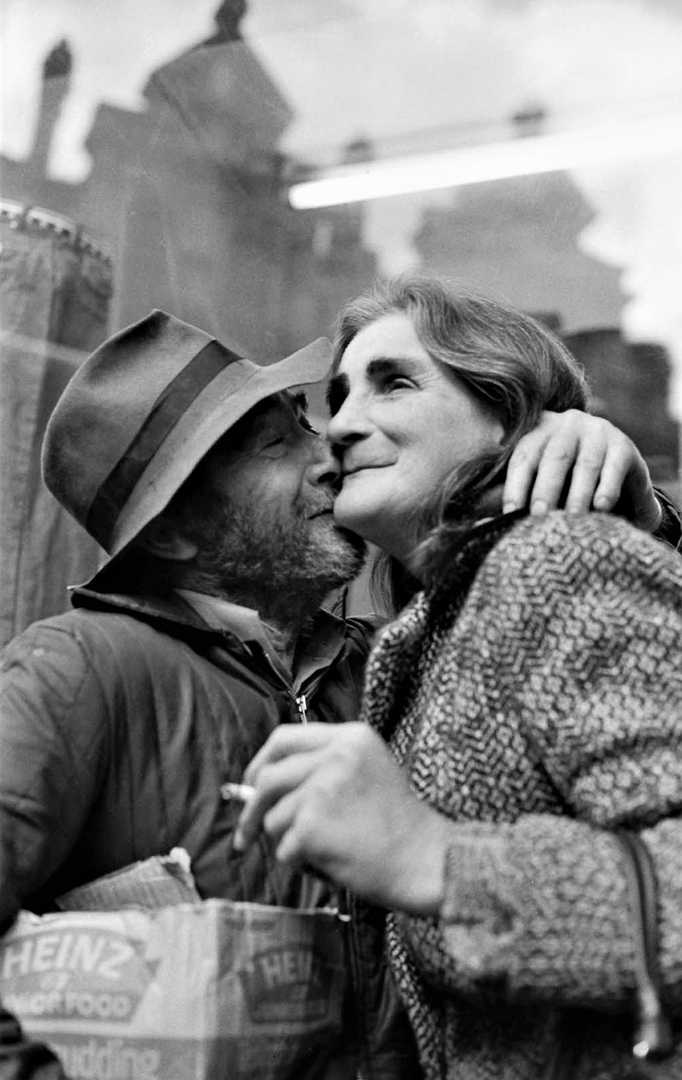
It was a pleasant surprise to see the BFI release a new documentary of Tish Murtha (dir. Paul Sng, 2023), the northeast photographer who catalogued the devastating effect of deindustrialisation during the 1970's-80's under Thatcherism. Murtha is probably most famous for her posthumously published books Youth Unemployment (2017), Juvenile Jazz Bands (2020), and Elswick Kids (2021).  

I have done a fair bit to highlight the photographic work of working class photographers on this blog, notably John Bulmer, Shirley Baker, Dave Sinclair and of course my own photography of Minsterley Parade in the early 1990's. I admit Tish Murtha slipped me by. At this point I should apologise profusely for my misogynistic oversight, but if you haven't heard of a photographer, you just haven't heard. It's ironic because she did quite a few exhibitions at the Bluecoat in Liverpool, and of course I lived there for a number of my most radical years in the 1990's. I should now rush to make amends and drag my sorry ass to the next film preview, examples of which are being screened in Liverpool, Edinburgh, Dundee, Hull and Newcastle. However, being more of an armchair anarchist nowadays, I think I will wait for a more accessible screening.

Update 9th April 2024: Tish is now available on BBC iPlayer, so available to all.  

For those that get to see it, the timing of this documentary could not be more apt. It was only a few weeks ago that Kier 'Stammer' was singing the virtues of Thatcher and how she 'did a lot of good things for the country.' Is this guy for real? Is he completely unaware there is an ingrained generation of northerners with long memories, who viscerally and antithetically reject the idolatry of Thatcherism as a cornerstone of their Labour support? The man is an idiot, and for that alone (well, actually many things besides) he can go and holler if he wants me to put my X next to his red version of the Tory party at the ballot box. Look at the photos below: of course not. Of course not Starmer, you f*cking culturally tone deaf cretin.