Showing posts with label Orchestral. Show all posts

Wednesday, 14 May 2025

Laacher Organ Impulses

Few things in this world capture the grandeur of the divine quite like the sound of a pipe organ filling a sacred space. This was especially true at Maria Laach Abbey on Sunday, March 9, 2025, where organist Gereon Krahforst brought the abbey’s magnificent organ to life with a carefully curated program of Bach’s masterpieces. The selection reflected not only the technical brilliance of the composer but also his deep spiritual insights; affirming the eternal majesty of Bach’s music.

The concert began with the Prelude and Fugue in F minor, BWV 534; a work that exemplifies Bach’s ability to balance somber intensity with an almost architectural sense of order. The deep, brooding tones of the prelude contrasted beautifully with the fugue’s intricate counterpoint; setting the stage for the journey ahead. Following this, Krahforst performed several of Bach’s Chorale Preludes; starting with “O Mensch, bewein’ dein Sünde groß” BWV 622; a piece from the Orgelbüchlein that meditates on human sin and redemption. The long, flowing melody; woven over a subtle yet expressive accompaniment; created an atmosphere of profound reflection.

The program continued with two settings of “Aus tiefer Not ich schrei zu Dir”; BWV 686 and BWV 687; each showcasing a different approach to the same powerful Lutheran hymn. The former, written in organo pleno a pedale doppio; was grand and imposing; demanding mastery of the instrument; while the latter, labeled manualiter; offered a more intimate and intricate meditation. The Trio in D minor, BWV 583; provided a lighter, more lyrical interlude; demonstrating Bach’s mastery of trio textures with its playful interweaving of voices. After this, the concert returned to the realm of faith with the Chorale Prelude “Ehre sei Dir, Christe” BWV 1097; an exultant declaration of praise and devotion.

No Bach organ recital would be complete without a grand finale; and what better way to conclude than with the Passacaglia and Fugue in C minor, BWV 582? This piece stood as one of Bach’s greatest achievements for the organ; featuring a powerful repeating bass line that served as the foundation for an increasingly complex and dramatic set of variations. The fugue that followed built to an overwhelming climax; leaving listeners in awe of Bach’s genius.

Beyond the sheer beauty of the music; concerts like this at Maria Laach Abbey remind us of the organ’s role as a bridge between the earthly and the divine. Whether in the thunderous majesty of the full organ or the hushed reverence of a single sustained note; Bach’s music spoke to the soul; offering moments of both grandeur and peace. As the final notes of the Passacaglia faded into the abbey’s sacred silence; the audience was left in deep reverence. Bach’s music, performed in such a setting, was more than just sound; it was a spiritual experience; an invitation to reflect; to feel; and to connect with something greater than ourselves.

The audience was encouraged to support the continuation of these concerts through donations; ensuring that the tradition of great organ music at Maria Laach lives on. After all, in the words inscribed on the program:

Im gewaltigen Klang der Orgel können wir Gottes Größe erfahren; in ihren stillen Klängen seinen Frieden. (In the mighty sound of the organ, we can experience God's greatness; in its quiet tones, His peace).


The concert program reads:

Maria Laach
Laacher Organ Impulses
Sunday, March 9, 2025, 16:00

Gereon Krahforst, Maria Laach, Organ

Program

Johann Sebastian Bach (1685–1750)

  1. Prelude and Fugue in F minor, BWV 534
  2. Chorale Prelude “O Mensch, bewein’ dein Sünde groß”, BWV 622
  3. Chorale Prelude “Aus tiefer Not ich schrei zu Dir”, BWV 686 (in organo pleno a pedale doppio)
  4. Chorale Prelude “Aus tiefer Not ich schrei zu Dir”, BWV 687 (manualiter)
  5. Trio in D minor, BWV 583
  6. Chorale Prelude “Ehre sei Dir, Christe”, BWV 1097
  7. Passacaglia and Fugue in C minor, BWV 582

We kindly ask for your generous donation at the exit to support the continuation of the beloved matinée series.

"In the mighty sound of the organ, we can experience God's greatness; in its quiet tones, His peace."

Tuesday, 25 February 2025

Keith Jarrett: The Köln Concert (1975)

I recently listened to the BBC Radio 4 Artworks programme on "50 Years of the Köln Concert" which had the subtitle: "Fifty years after Keith Jarrett's Köln Concert enthralled a sellout crowd, Kevin le Gendre explores the album's enduring appeal and how a gig nearly cancelled led to a new sound world." I hadn't heard the Köln Concert for such a long time, many years ago, so it was good to catch up!

Keith Jarrett’s The Köln Concert is one of those rare recordings that feels almost mythical, not just because of the music but because of the story behind it. It wasn’t supposed to happen the way it did. In fact, it almost didn’t happen at all.

On January 24, 1975, Jarrett arrived at the Cologne Opera House exhausted, sleep-deprived, and suffering from back pain. To make matters worse, the piano provided for him was completely wrong—a small, poorly maintained instrument with weak bass notes and uneven tuning. It wasn’t the concert grand he was expecting, and for a pianist like Jarrett, who thrives on the full expressive range of the instrument, it was a disaster. He nearly walked away.

But something made him stay. Maybe it was the insistence of the young concert promoter, Vera Brandes, who had worked so hard to organize the event. Maybe it was sheer determination, or maybe it was that strange magic that sometimes happens when artists are forced to work within limitations. Whatever the reason, Jarrett sat down at that inadequate piano and started to play.

What came out was unlike anything else. Because he couldn’t rely on the deep resonance of a proper concert grand, he leaned into rolling left-hand patterns, hypnotic rhythms, and shimmering, gospel-like harmonies that made the most of the piano’s midrange. The result was a performance that felt intimate yet expansive, structured yet free, deeply personal yet somehow universal. There are moments of quiet reflection, moments of soaring joy, and stretches where you can hear him losing himself in the music with libidinal grunts and groans. The result is a powerfully spiritual, transcendent and life-affirming performance. 

The recording went on to become the best-selling solo piano album of all time, a landmark not just in jazz but in improvised music as a whole. And yet, when you listen to it, none of that history really matters. What matters is the sound of an artist surrendering to the moment, finding beauty in imperfection, and turning what could have been a disaster into something timeless.

Lets see how long this Youtube remains active until it is pulled by copyright (Answer: 14 days, so I have replaced it with this sterile album cover):


Tuesday, 5 November 2024

Scenes from a Wedding

They say its the best day of your life, and it bloody well is. I never imagined my heart would belong to such a beauty of a kleine German lady, or that I would be whisked away from my rugged homeland to an ancient castle for a fairy tale wedding, with a purple-robed princess and me wearing an ancestral kilt. Namedy Castle, near Andernach, began as a 14th-century moated fortress but was transformed in the early 18th century into a Baroque pleasure palace by Johann Arnold von Solemacher. Known for its decadent social life and grand architecture, it later suffered war damage, but today serves as a venue for concerts and celebrations, continuing its legacy of luxury and festivity. 

Our wedding day went without a hitch, except for the act of getting hitched itself. Well, ok after a few drinks I fell down the stone stairs and face planted in the wall opposite, but luckily for me, nobody saw that indignity. As you can see from the order of events & photos (you only get the anonymised ones here, pauper), we had a marvellous time with poetry, music, grand surroundings, a bracing whisky Quaich ceremony, handfasting, champagne reception, Scottish pipers, and the most sumptuous meal at the Eifeler Seehütte in Rieden, on the banks of the Waldsee lake into which the beautiful autumn leaves cascaded in their orange and gold finery until the dusk consumed everything. Then, after it was all over, I went out to the lakeside with my bride and we sent Chinese lanterns serenely along the still misty waters, like hopeful wishes for a future of wellbeing and happiness. What an incredible day, and an incredible event. It shall live with me forever, and every time I look into the eyes of my ever-loving bride. 


Aedh Wishes for the Cloths of Heaven by W.B. Yeats
Had I the heaven's embroidered cloths,
Enwrought with golden and silver light,
The blue and the dim and the dark cloths
Of night and light and the half-light,
I would spread the cloths under your feet:
But I, being poor, have only my dreams;
I have spread my dreams under your feet;
Tread softly because you tread on my dreams.


From The Prophet, by Kahlil Gibran
Love has no other desire but to fulfil itself.
But if you love and must needs have desires,
Let these be your desires:
To melt and be like a running brook
That sings its melody to the night,
To know the pain of too much tenderness.
To be wounded by your own understanding of love;
And to bleed willingly and joyfully.
To wake at dawn with a winged heart
And give thanks for another day of loving;
To rest at the noon hour and meditate love's ecstasy;
To return home at eventide with gratitude;
And to sleep with a prayer
For the beloved in your heart
And a song of praise upon your lips.


For the Quaich Ceremony:
Ihr seid nun eins ihr beide by Johann Wolfgang von Goethe
Ihr seid nun eins, ihr beide,
und wir sind mit euch eins.
Trinkt auf der Freude Dauer
ein Glas des guten Weins!
Und bleibt zu allen Zeiten
einander zugekehrt
durch Streit und Zwietracht werde
nie euer Bund zerstört.


You Two Are One Now, by Johann Wolfgang von Goethe
~ English Translation ~
You two are one now
and we are with you one.
Drink to happiness and permanence
a glass of good wine.
And remain at all times
turned towards each other
and fight and conflict may
never break your bond.
 

For the Handfasting Ceremony: 
This Marriage by Rumi 
May these vows and this marriage be blessed. 
May this marriage be as sweet as milk and honey, 
May this marriage be as intoxicating as old wine, 
May this marriage be fruitful like the date palm, 
May this marriage be full of laughter, and everyday a paradise. 
May this marriage be a seal of compassion, for here and hereafter. 
May this marriage have a fair face and a good name, 
May this marriage be as welcome as the full moon in the night sky. 
Listen lovers, now you go on, as I become silent and kiss this blessed night. 


Liebeslied, by Rainer Maria Rilke
Wie soll ich meine Seele halten, daß
sie nicht an deine rührt? Wie soll ich sie
hinheben über dich zu andern Dingen?
Ach gerne möcht ich sie bei irgendwas
Verlorenem im Dunkel unterbringen
an einer fremden stillen Stelle, die
nicht weiterschwingt, wenn deine Tiefen schwingen.
Doch alles, was uns anrührt, dich und mich,
nimmt uns zusammen wie ein Bogenstrich,
der aus zwei Saiten eine Stimme zieht.
Auf welches Instrument sind wir gespannt?
Und welcher Spieler hat uns in der Hand?
O süßes Lied!


Love Song, by Rainer Maria Rilke
~ English translation ~
How shall I hold my soul and yet not touch
It with your own? How shall I ever place
It clear of you on anything beyond?
Oh gladly I would stow it next to such
Things in the darkness as are never found
Down in an alien and silent space
That does not resonate when you resound.
But everything that touches me and you
Takes us together like a bow on two
Taut strings to stroke them to the voice of one.
What instrument have we been lain along?
Whose are the hands that play our unison?
Oh sweet song!


Order of Service 

Time & Venue: 2pm Tuesday 5th November 2024 Burg Namedy, Andernach 
Processional: Scarborough Fair, by Simon & Garfunkle. 
Alternative processional: Fantasia on Greensleeves, by Ralph Vaughan Williams.

Introduction from The Registrar 
Poem from The Prophet, by Kahlil Gibran. 
The Marriage Ceremony led by the Registrar 
Exchanging of the vows and rings,
Including the poem: Aedh Wishes for the Cloths of Heaven by W.B. Yeats. 

Handfasting to the poem: This Marriage by Rumi 
The signing of the Register 
The Quaich Ceremony to the poem: Ihr seid nun eins ihr beide by Johann Wolfgang von Goethe 

Recessional: Intermezzo in A major, Op. 118 No. 2 by Johannes Brahms 

The ceremony was followed by drinks in the castle. 
The reception dining event was held at Eifeler Seehütte in Rieden at 5pm.

Friday, 1 December 2023

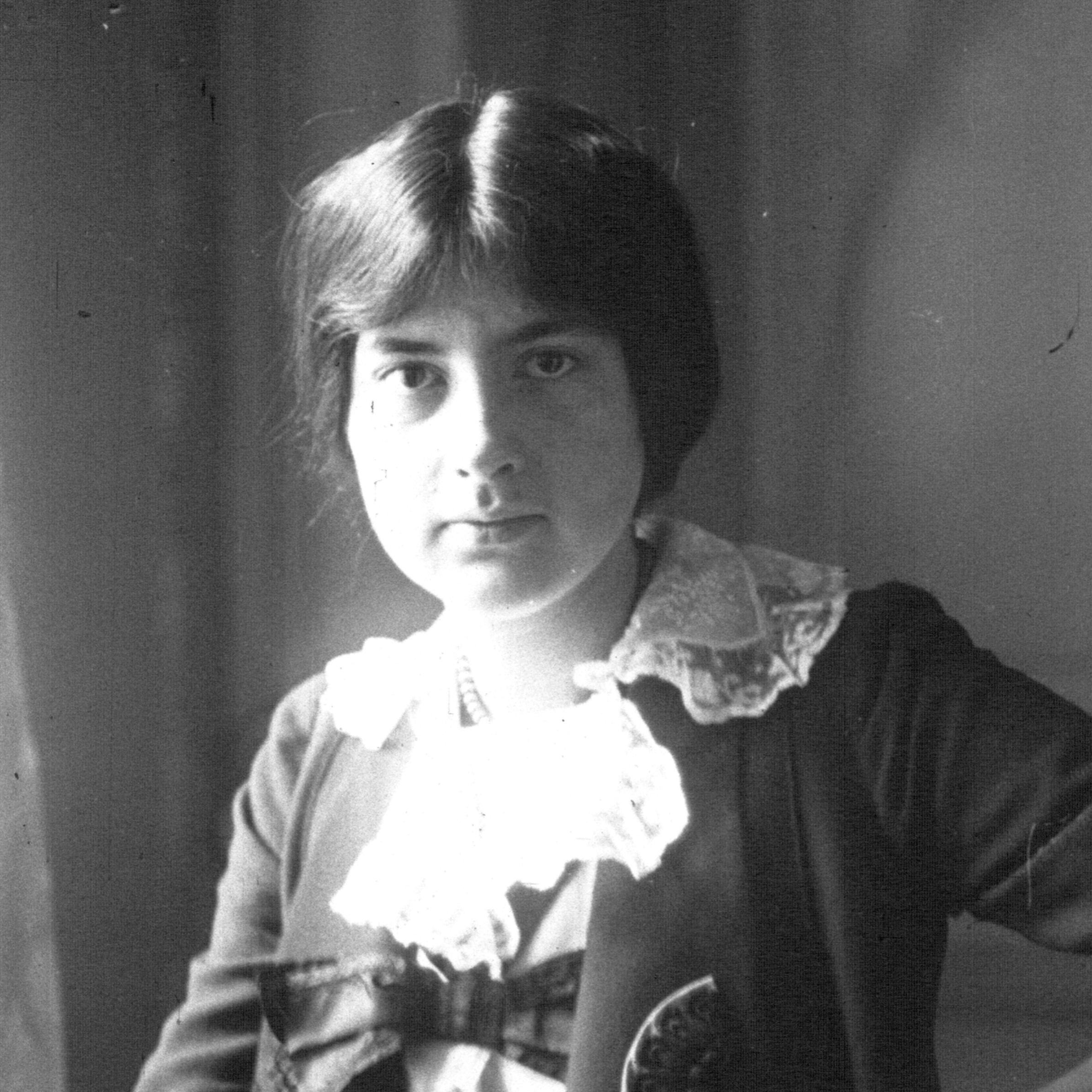
Lili Boulanger: Sous Bois (1911)

Lili Boulanger's life was tragically cut short at age 24 by contracting bronchial pneumonia which progressed via immune suppression to intestinal tuberculosis. Her post-Romantic musical style was more symbolic than impressionistic, featuring thematic obscurantism, unresolved 7th and 9th chords in the style of Debussy, inclusion of modal and parallel chordal progressions, etc. The end product is forlorn, somewhat alienated 20th century aural landscape which Boulanger supplemented by reference to equally forlorn literature, such as her short compositions Clairières dans le ciel (1914) to the poetry of Francis Jammes:

"Today is the most beautiful of Easter days.
I plunged deep into the blue countryside,
across woods, across meadows, across fields.
How is it, O heart, you did not die a year ago?
O heart, once more I’ve caused you this Calvary
of seeing again this village where I suffered so,
the roses which bled before the vicarage,
the lilacs that kill me in their melancholy beds."

Boulanger's "Sous Bois" was performed by the choral ensemble Voices of Ascension in March 2019. Although the piece had fallen into obscurity during the 20th century, it is rightly undergoing a  popular revival of interest. 


References

Citron, M., 1991. Women and Music. Bloomington: Indiana University Press. Pendle, K (ed). 

Classic FM., 2023. Who was Lili Boulanger? Meet the inspiring composer who died tragically young. Classic FM Discover Music. https://www.classicfm.com/discover-music/lili-boulanger/ 

Oxford International Song Festival., 2023. Songs: Demain fera un an by Lili Boulanger from Clairières dans le ciel (1914). https://oxfordsong.org/song/demain-fera-un-an 

Wikipedia., 2023. Lili Boulanger. https://en.wikipedia.org/wiki/Lili_Boulanger 

Wednesday, 1 November 2023

Johanna Müller-Hermann: String Quartet in E# major, Op. 6 (1912)

Johanna Müller-Hermann (1868 -1941), was an Austrian composer who studied with Guido Adler and Zemlinsky. Although she received a good musical education, in keeping with her comfortably middle-class background, she was not allowed to progress but was trained as a teacher. Her marriage in 1893 to the traffic specialist Otto Müller-Martini freed her to concentrate again on her music, studying piano, violin, theory and composition. It is a genuine tragedy that Müller-Hermann's music has been largely erased from history, one which can only be viewed through a feminist lens. Such a ruinous bowdlerisation is attributable to the insidious misogyny of nazism and a postwar cultural purism in which the "allies" should bear some responsibility.  


Thursday, 2 December 2021

Edvard Grieg: The Death of Åse (1875)


Peer before the King of the Trolls.
1936 illustration by Arthur Rackham (1867-1939).

Those who are immersed in deep thoughts stumble easily. So says Ibsen in Peer Gynt. Pity the wistful philosopher. Pity more the unwitting victim of rumination; those drawn into their deepest candlelit and solitary chamber by accident of fortune or artifice. It is for such souls that Grieg’s Åses død was made.

The Death of Åse is a strings lament which rakes at the soul like tortuous winds. It suppurates with melancholy and menace. To allow it in, is to “war with trolls in heart and soul” and go hand in hand with the funereal into oblivion.
“So unspeakably poor can a soul then return
to nothingness in the misty gray.
You lovely earth, do not be angry
that I trampled your grass to no avail.
You lovely sun, you have squandered
your shining sprinkles in an empty cabin.”
~ Peer Gynt: Henrik Ibsen ~

It was in this unwitting state I attended the Bridgewater Hall, Manchester on 2nd December 2021. Emerging bleary-eyed from the isolation of pandemic, and complying with bag checks, mask-wearing and social distancing, we cringed at every stray cough amplified in the auditorium. The evening was entitled Finlandia, a celebration of Scandinavia at the threshold of the winter solstice. The rainswept darkness of the evening was beautiful and totally enveloping.

Edvard Grieg: The Death of Åse (1875)

Finlandia, a selection of Scandinavian repertoire was meticulously performed by students of the Royal Northern College of Music, and included:

Sibelius - Finlandia
Grieg - Piano Concerto
Alfvén - Swedish Rhapsody No.1, ‘Midsummer Vigil’
Sibelius - Valse triste
Christine Hals - Calling the Aurora (Northern Lights Kulning)
Grieg - Peer Gynt Suite: selection

To quote the Bridgewater Hall:
Perfect for winter, this concert celebrates the mystery and beauty of the far North. Two of the most famous pieces by Norwegian Edvard Grieg feature: his musical tableaux for Peer Gynt and his stunning Piano Concerto, with its beautiful central Adagio, which will be performed by BBC New Generation Artist and Terence Judd-Hallé Award recipient, pianist Elisabeth Brauß. Film composer and vocalist Christine Hals, known for her Scandinavian herding call in Disney’s Frozen, brings the unique sound to her ‘Calling the Aurora’. Hugo Alfvén contributes his light-hearted Midsummer Vigil, a symphonic rhapsody that gets right to the heart of his homeland’s folk music, whilst Sibelius is represented by his haunting and melancholy Valse triste and his stirring tribute to his homeland, Finlandia.

Haunting indeed.

Saturday, 15 February 2020

Moritz Moszkowski ‒ Piano Concerto in E major, Op 59 (1898)


In 1899, the Berlin Academy elected Moszkowski a member. He was many times invited by piano manufacturers to appear in the United States to show off their pianos, but despite being offered massive fees, he always refused.

In 1908, by the age of 54, Moszkowski had already become a recluse as he began to suffer from poor health. His popularity began to fade and his career slowly went into decline. He stopped taking composition pupils because "they wanted to write like artistic madmen such as Scriabin, Schoenberg, Debussy, Satie."

His last years he spent in poverty for he had sold all his copyrights and invested the whole lot in German, Polish and Russian bonds and securities, which were rendered worthless on the outbreak of the war. On 21 December 1921, when he was ill and heavily in debt, his friends and admirers arranged a grand testimonial concert on his behalf at Carnegie Hall, involving 15 grand pianos on stage. The concert netted $13,275, with one part to provide immediate relief from his financial problems, plus an annuity of $1,250 annually for the rest of his life.

However, Moszkowski's illness lingered and he died from stomach cancer on 4 March of the next year, before the supply of funds could reach him. The money raised went instead to pay his funeral expenses and to his wife and son.

Abbreviated from the Moszkowski Wikipedia article.

Thursday, 1 August 2019

Takashi Yoshimatsu: Memo Flora Op.67 (1998)

This is a perfect piano concerto for the month of August. Takashi Yoshimatsu is not the most well known composer, which is all the more reason to popularise his music. Memo Flora is about plants, and is in three parts:

1. Flower (Allegro)
2. Petals (Andante)
3. Bloom (Rondo in 4/8 and 5/8).

Overall, Memo Flora is poised, intricate, but demonstrates a strength in resilience which is typical of the vegetative soul. It contains art, optimism and tragedy in every bar. It is quite possible however, that Yoshimatsu could do with a botany lesson because the progression flower > petals > bloom is not quite developmentally correct, or even indicates the full range of plant life. Imagine what a masterpiece we would have if he had decided to write a concerto on seeds > saplings > flower > fruition > death and rebirth. Of course, it is easy to criticise from the sidelines whilst the master creates, so instead I will leave you to the music to fold it into your own fertile imaginings and enjoyment.

The artwork is by Yuka Taguchi (b.1992) and is called Pandora (2014), of which she says: "F200 ink, pigment and gold on Japanese paper. I drew a world like the paradise before Pandora of Greek mythology opened the jar. Redon drew several paintings on the subject of Pandora, and I was so moved by them that I wanted to draw one myself someday."

Sunday, 30 April 2017

Adagietto from Mahler’s 5th Symphony (1902)


The 2nd (and main) theme of the BBC Phil's Transfigured Night was Mahler’s 5th Symphony. Mahler objected to it being described in any key: "From the order of the movements (where the usual first movement now comes second) it is difficult to speak of a key for the 'whole Symphony', and to avoid misunderstandings the key should best be omitted."


Mahler wrote his fifth symphony during the summers of 1901 and 1902. In February 1901 Mahler had suffered a sudden major haemorrhage and his doctor later told him that he had come within an hour of bleeding to death. The composer spent quite a while recuperating. He moved into his own lakeside villa in the southern Austrian province of Carinthia in June 1901. Mahler was delighted with his newfound status as the owner of a grand villa. According to friends, he could hardly believe how far he had come from his humble beginnings. He was director of the Vienna Court Opera and the principal conductor of the Vienna Philharmonic. His own music was also starting to be successful. Later in 1901 he met Alma Schindler and by the time he returned to his summer villa in summer 1902, they were married and she was expecting their first child. I think this is reflected in the music. It is fundamentally optimistic in its grandeur.

The Austrian conductor Herbert von Karajan once said that when you hear the symphony, "you forget that time has passed. A great performance of the Fifth is a transforming experience. The fantastic finale almost forces you to hold your breath."


The Adagietto is said to represent Mahler's love song to his wife Alma. According to a letter she wrote to Willem Mengelberg, the composer left a small poem:

How much I love you, you my sun,
I cannot tell you that with words.
I can only lament to you my longing
and my love, my bliss!

The Adagietto features prominently in Luchino Visconti’s 1971 Italian- French film Death in Venice. The clip shows the final scene with a dying Dirk Bogarde, looking wistfully on as his youth disappears enigmatically into the blurring sea, striving for Avalon against the waves. There is something very utopian about this music, which delights in getting caught up in the fronds of reality.


After its premiere, Mahler is reported to have said, "Nobody understood it. I wish I could conduct the first performance fifty years after my death."  

Verklärte Nacht: Arnold Schoenberg (1899)


I had the pleasure of recently attending a BBC Philharmonic Orchestra concert at the Bridgewater Hall, Manchester featuring music by Arnold Schoenberg (the orchestral version of Verklärte Nacht) and Gustav Mahler (the classic Symphony No 5 in C sharp minor). Although Mahler was the main course, I must say I was utterly blown away by Schoenberg’s Verklärte Nacht. It truly was music of transfiguration.

This was helped along considerably by the beguiling Venezuelan conductor Rafael Payare, who I am still not sure even now whether he is some kind of faunic creature owing to his magnetic physical presence. It is fair to say with him the baton becomes a magical wand carving out sigils and omens under whose spell the orchestra falls. Diminutive in stature, with a mass of afro hair and exaggerated features, he is every bit the caricature of a nineteenth century conductor, dressed in enormously extravagant coat tails, and contorting himself into every note in the manner of an electrified marionette. Without a doubt he is the most expressive conductor I have ever seen.

Conductor Rafael Payare

Verklärte Nacht (Transfigured Night), Op. 4, is a string sextet in one movement composed in 1899 in just three weeks, it is considered Schoenberg's earliest important work. It was inspired by Richard Dehmel's poem of the same name, combined with the influence of Schoenberg's strong feelings upon meeting Mathilde von Zemlinsky (the sister of his teacher Alexander von Zemlinsky), whom he would later marry. The movement can be divided into five distinct sections which refer to the five stanzas of Dehmel's poem. Dehmel's poem describes a man and woman walking through a dark forest on a moonlit night. The woman shares a dark secret with her new lover: she bears the child of another man.

Two people are walking through a bare, cold wood;
the moon keeps pace with them and draws their gaze.
The moon moves along above tall oak trees,
there is no wisp of cloud to obscure the radiance
to which the black, jagged tips reach up.

Artist Schiele Bildnis portrait of
Arnold Schönberg 1917

Verklärte Nacht was controversial at its 1902 premiere. This was due to the highly advanced harmonic idiom, although Schoenberg did receive praise for his inventiveness. Some reaction was due to the use of Dehmel's poem as inspiration, questioning the viability of setting its themes to music, or being concerned about the situation of the woman in the story.


A particular point of controversy was the use of a single 'nonexistent' (that is, uncategorized and therefore unpermitted) inverted ninth chord, which resulted in its rejection by the Vienna Music Society. Schoenberg remarked "and thus (the work) cannot be performed since one cannot perform that which does not exist"

Thursday, 3 December 2015

Tchaikovsky: The Seasons (1876)


The Seasons, Op. 37a is a set of twelve short character pieces for solo piano by the Russian composer Pyotr Ilyich Tchaikovsky. The work was commenced in 1875 shortly after the premiere of Tchaikovsky's First Piano Concerto, and continued while he was completing his first ballet, Swan Lake. Nikolay Matveyevich Bernard, the editor of the St. Petersburg music magazine Nouvellist, commissioned Tchaikovsky to write the 12 short piano pieces, one for each month of the year. Bernard suggested a subtitle for each month's piece. Tchaikovsky accepted the commission and all of Bernard's subtitles, and in the December 1875 edition of the magazine, readers were promised a new Tchaikovsky piece each month throughout 1876.

Tchaikovsky did not devote his most serious compositional efforts to these pieces; they were composed to order, and they were a way of supplementing his income. He saw the writing of music to a commission as just as valid as writing music from his own inner inspiration, however for the former he needed a definite plot or text, a time limit, and the promise of payment at the end. Most of the pieces were in simple ABA form, but each contains a minor melodic masterpiece.

The 12 pieces with their subtitles are:

January: At the Fireside (A major)
February: Carnival (D major)
March: Song of the Lark (G minor)
April: Snowdrop (B-flat major)
May: Starlit Nights (G major)
June: Barcarolle (G minor)
July: Song of the Reaper (E-flat major)
August: Harvest (B minor)
September: The Hunt (G major)
October: Autumn Song (D minor)
November: Troika (E major)
December: Christmas (A-flat major)


I find Tchaikovsky's symphonies somewhat unctuous most of the time. When you’re in the mood for a Romantic hurricane of course, they hit the spot. Very often, however, I find him too much. That’s what makes these delightful piano pieces so enjoyable. Constrained by his commercial brief, Tchaikovsky was unable to indulge himself with overblown histrionics and instead reveals a more ordered, rational style, which balances out perfectly.

In researching this blog, I found out in all probability Tchaikovsky died of cholera rather than throwing himself off a bridge, wrought with conflicts over his sexuality. I suppose this is consistent with the message that flamboyant gestures aren't always the best way to go through life.

North Utsire

Saturday, 31 October 2015

Camille Saint-Saëns: Danse Macabre (1874)


The artistic genre of the dance of death was most probably developed in France. The dance of death of the Cimetière des Innocents in Paris, painted in 1424, is considered the starting point of this tradition. During the second half of the 15th century, the dance of death enjoyed an always growing popularity.


The dances of death were mostly painted (or more rarely carved) on the outside walls of cloisters, of family vaults, of ossuaries or inside some churches. These frescoes represent an emaciated corpse or a skeleton coupled with a representative of a certain social class. The number of characters and the composition of the dance vary. The dance of death often takes the form of a farandole, an open chain community dance a bit like a grotesque conga. Below or above the picture are painted verses by which death adresses its victim. He often talks in a threatening and accusing tone, sometimes also cynic and sarcastic. Then comes the argument of the Man, full of remorse and despair, crying for mercy. But death leads everyone into the dance: from the whole clerical hierarchy (pope, cardinals, bishops, abbots, canons, priests), to every single representative of the laic world (emperors, kings, dukes, counts, knights, doctors, merchants, usurers, robbers, peasants, and even innocent children). Death does not care for the social position, nor for the richness, sex, or age of the people it leads into its dance. It is often represented with a musical instrument. This characteristic has a symbolic significance and appears already at the beginning of the dance of death. The instrument evokes the tempting, a little diabolic enchanting power of music. Think of the sirens' song, of the flute player of Hameln, etc. Like them, death charms mankind with its music.

Danse Macabre, Op. 40, is a tone poem for orchestra, written in 1874 by the French composer Camille Saint-Saëns. It started out in 1872 as an art song for voice and piano with a French text by the poet Henri Cazalis, which is based on an old French superstition.

Zig, zig, zig, Death in cadence,
Striking with his heel a tomb,
Death at midnight plays a dance-tune,
Zig, zig, zig, on his violin.
The winter wind blows and the night is dark;
Moans are heard in the linden-trees.
Through the gloom, white skeletons pass,
Running and leaping in their shrouds.
Zig, zig, zig, each one is frisking.
The bones of the dancers are heard to crack-
But hist! of a sudden they quit the round,
They push forward, they fly; the cock has crowed.


Camille Saint-Saëns

In 1874, the composer expanded and reworked the piece into a tone poem, replacing the vocal line with a solo violin. According to legend, "Death" appears at midnight every year on Halloween. Death calls forth the dead from their graves to dance for him while he plays his fiddle (here represented by a solo violin). His skeletons dance for him until the rooster crows at dawn, when they must return to their graves until the next year. The piece opens with a harp playing a single note, D, twelve times (the twelve strokes of midnight) which is accompanied by soft chords from the string section. The solo violin enters playing the tritone consisting of an A and an E-flat—in an example of scordatura tuning, the violinist's E string has actually been tuned down to an E-flat to create the dissonant tritone. The first theme is heard on a solo flute, followed by the second theme, a descending scale on the solo violin which is accompanied by soft chords from the string section. The first and second themes, or fragments of them, are then heard throughout the various sections of the orchestra.


The piece becomes more energetic and at its midpoint, right after a contrapuntal section based on the second theme, there is a direct quote played by the woodwinds of the Dies Irae, a Gregorian chant from the Requiem that is melodically related to the work's second theme. The Dies Irae is presented unusually in a major key. After this section the piece returns to the first and second themes and climaxes with the full orchestra playing very strong dynamics. Then there is an abrupt break in the texture and the coda represents the dawn breaking (a cockerel's crow, played by the oboe) and the skeletons returning to their graves. The piece makes particular use of the xylophone to imitate the sounds of rattling bones. Saint-Saëns uses a similar motif in the Fossils movement of The Carnival of the Animals. Personally, I don't like the breaking dawn motif. I think its cheesy & the whole piece would be much better finishing off in a disorganised orgy of sound & revelry. I'm sure it must have crossed Saint-Saëns's mind to do that but perhaps he thought the work needed sanitising for the benefit of his morally indignant audience.

When Danse Macabre was first performed it was naturally not well received. The piece caused widespread consternation: the commentator Roger Nichols mentions adverse reaction to "the deformed Dies irae plainsong", the "horrible screeching from solo violin", the use of a xylophone and "the hypnotic repetitions", in which Nichols hears a pre-echo of Ravel's Boléro. Perfect! Let the puritans weep. I don't know which version is being used in the vid above set to various Tim Burton film scenes, or who played it, but I thought it was pretty good & fitted in with the Halloween theme.


North Utsire 

Thursday, 23 July 2015

Maurice Ravel: Piano Trio in A minor (1914)


1. Modéré
2. Pantoum (Assez vif)
3. Passacaille: Trés large
4. Final: Animé

Yehudi Menuhin, violin
Gaspar Cassadó, cello
Louis Kentner, piano
Rec. 1960

Ravel was not by inclination a teacher, but he gave lessons to a few young musicians he felt could benefit from them. Manuel Rosenthal was one, and records that Ravel was a very demanding teacher when he thought his pupil had talent. Like his own teacher, Fauré, he was concerned that his pupils should find their own individual voices and not be excessively influenced by established masters. He warned Rosenthal that it was impossible to learn from studying Debussy's music: "Only Debussy could have written it and made it sound like only Debussy can sound." When George Gershwin asked him for lessons in the 1920s, Ravel, after serious consideration, refused, on the grounds that they "would probably cause him to write bad Ravel and lose his great gift of melody and spontaneity". The best known composer who studied with Ravel was probably Ralph Vaughan Williams, who was his pupil for three months in 1908. Vaughan Williams recalled that Ravel helped him escape from "the heavy contrapuntal Teutonic manner ... Complexe mais pas compliqué was his motto."

In 1900, Maurice became part of a group comprised of innovative artists and musicians, who called themselves The Apache Club. Women weren’t allowed to join this organization but members of the group met regularly and inspired each other, until the outbreak of World War I in 1914. Here, Ravel met Apache members: Erik Satie, Jean Cocteau, André Gide, Paul Valéry, Igor Stravinsky, Nijinsky and Serge Diaghile. The Apaches usually met at the home of Ida and Cyprien Godebski. One of the first works of Ravel’s performances for the Apaches was ‘Jeux d’eau’. Another one of his early masterpieces was ‘Pavane pour une infante défunte’ in 1902.

Maurice Ravel, Vaslav Nijinsky, Bronislava Nijinska in Paris (1914)

Vaughan Williams's recollections throw some light on Ravel's private life, about which the latter's reserved and secretive personality has led to much speculation. Vaughan Williams, Rosenthal and Marguerite Long have all recorded that Ravel frequented brothels. Long attributed this to his self-consciousness about his diminutive stature, and consequent lack of confidence with women. By other accounts, none of them first hand, Ravel was in love with Misia Edwards, or wanted to marry the violinist Hélène Jourdan-Morhange. Rosenthal records and discounts contemporary speculation that Ravel, a lifelong bachelor, may have been homosexual. Such speculation recurred in a 2000 life of Ravel by Benjamin Ivry; subsequent studies have concluded that Ravel's sexuality and personal life remain a mystery.


The first movement of Piano Trio in A minor was used extensively as a soundtrack in the 1992 Claude Sautet-directed love triangle Un cœur en hiver (A Heart in Winter), starring Emmanuelle Béart, Daniel Auteuil and André Dussollier. The music credits in the film are given to Maurice Ravel.

North Utsire

Sunday, 3 May 2015

Richard Strauss: Goebbels’ Decadent Neurotic


In March 1933, when Strauss was 68, Adolf Hitler and the Nazi Party rose to power. Strauss never joined the Nazi party, and studiously avoided Nazi forms of greeting. For reasons of expediency, however, he was initially drawn into cooperating with the early Nazi regime in the hope that Hitler—an ardent Wagnerian and music lover who had admired Strauss's work since viewing Salome in 1907—would promote German art and culture. Strauss's need to protect his Jewish daughter-in-law and Jewish grandchildren also motivated his behavior, in addition to his determination to preserve and conduct the music of banned composers such as Mahler and Debussy.


In 1933, Strauss wrote in his private notebook:

I consider the Streicher-Goebbels Jew-baiting as a disgrace to German honour, as evidence of incompetence - the basest weapon of untalented, lazy mediocrity against a higher intelligence and greater talent. 

Meanwhile, far from being an admirer of Strauss's work, Joseph Goebbels maintained expedient cordiality with Strauss only for a period. Goebbels wrote in his diary:

Unfortunately we still need him, but one day we shall have our own music and then we shall have no further need of this decadent neurotic.

Strauss & Goebbels in the 1930's

Nevertheless, because of Strauss's international eminence, in November 1933 he was appointed to the post of president of the newly founded Reichsmusikkammer, the State Music Bureau. Strauss, who had lived through numerous political regimes and had no interest in politics, decided to accept the position but to remain apolitical, a decision which would eventually become untenable. He wrote to his family, "I made music under the Kaiser, and under Ebert. I'll survive under this one as well." In 1935 he wrote in his journal:

In November of 1933, the minister Goebbels nominated me president of the Reichsmusikkammer without obtaining my prior agreement. I was not consulted. I accepted this honorary office because I hoped that I would be able to do some good and prevent worse misfortunes, if from now onwards German musical life were going to be, as it was said, "reorganized" by amateurs and ignorant place-seekers.

Strauss privately scorned Goebbels and called him "a pipsqueak." However, in 1933 he dedicated an orchestral song, Das Bächlein ("The Little Brook"), to Goebbels, in order to gain his cooperation in extending German music copyright laws from 30 years to 50 years.

Strauss attempted to ignore Nazi bans on performances of works by Debussy, Mahler, and Mendelssohn. He also continued to work on a comic opera, Die schweigsame Frau, with his Jewish friend and librettist Stefan Zweig. When the opera was premiered in Dresden in 1935, Strauss insisted that Zweig's name appear on the theatrical billing, much to the ire of the Nazi regime. Hitler and Goebbels avoided attending the opera, and it was halted after three performances and subsequently banned by the Third Reich. On 17 June 1935, Strauss wrote a letter to Stefan Zweig, in which he stated:

Do you believe I am ever, in any of my actions, guided by the thought that I am 'German'? Do you suppose Mozart was consciously 'Aryan' when he composed? I recognise only two types of people: those who have talent and those who have none.

This letter to Zweig was intercepted by the Gestapo and sent to Hitler. Strauss was subsequently dismissed from his post as Reichsmusikkammer president in 1935.

Richard Strauss speaking at the German Composers'
Meeting, Berlin on 18 February 1934.

The 1936 Berlin Summer Olympics nevertheless used Strauss's Olympische Hymne, which he had composed in 1934. Strauss's seeming relationship with the Nazis in the 1930s attracted criticism from some noted musicians, including Arturo Toscanini, who in 1933 had said, "To Strauss the composer I take off my hat; to Strauss the man I put it back on again," when Strauss had accepted the presidency of the Reichsmusikkammer.  Much of Strauss's motivation in his conduct during the Third Reich was, however, to protect his Jewish daughter-in-law Alice and his Jewish grandchildren from persecution. Both of his grandsons were bullied at school, but Strauss used his considerable influence to prevent the boys or their mother being sent to concentration camps.

In 1947, Strauss made his first flight to conduct concerts in England arranged by his old friend Thomas Beecham. He was deeply depressed by having to justify himself to the denazification board, which was investigating those thought to have collaborated with the regime. In June 1948, he was cleared on all counts. Despite Strauss being cleared of collaboration, for decades his music suffered the same fate as Wagner’s: the composer’s association with the Nazis sullied the work, which was banned, ignored or reviled as a result. While Wagner is still verboten, Israel lifted its embargo on Strauss in the 1990s.

Strauss completed the composition of Metamorphosen, a work for 23 solo strings, in 1945. The title and inspiration for the work comes from a profoundly self-examining poem by Goethe, which Strauss had considered setting as a choral work. Generally regarded as one of the masterpieces of the string repertoire, Metamorphosen contains Strauss's most sustained outpouring of tragic emotion. Conceived and written during the blackest days of World War II, the piece expresses Strauss's mourning of, among other things, the destruction of German culture - including the bombing of every great opera house in the nation. At the end of the war, Strauss wrote in his private diary:

The most terrible period of human history is at an end, the twelve year reign of bestiality, ignorance and anti-culture under the greatest criminals, during which Germany's 2000 years of cultural evolution met its doom.


Goethe’s poem Metamorphosis of Plants can be found here, but Strauss’ title Metamorphosen undoubtedly refers to both Goethe poems The Metamorphosis of Plants and The Metamorphosis of Animals. In both, the philosopher optimistically conceives of that process as “order in motion.” Strauss's Metamorphosen turns Goethe's concept on its head. In the musical work, self-knowledge does not elevate man; rather, it reveals his bestial nature. To symbolize the inversion of Goethe's noble concept, Strauss reworks a basic motive from his “Niemand” sketch in the Metamorphosen. In the vocal piece, the C-major tonic is initially undermined by either E-minor or C-minor harmonies, either of which may easily be transformed into C major by the shift of a single pitch. Jackson equates those slippery harmonic relationships, which he calls the Metamorphosenmotiv, with the elusiveness of Goethe’s unknowable self. In “Niemand wird sich selber kennen” the poet asserts that self-knowledge is the way in which man elevates himself, a concept that Strauss supports in his vocal setting through the triumph of C major over the E-minor and C-minor harmonies.

In the Metamorphosen, however, Strauss’s transformations of the Metamorphosenmotiv determine the work’s underlying harmonic structure and symbolically contradict Goethe. C major is defeated by C minor, self-knowledge is not redemptive, and only man’s most degenerate nature is revealed.

For a musical form, Strauss employs a loose sonata-allegro design in which the recapitulation necessarily emphasizes the triumph—-or in this case, the defeat of one tonality by another. To focus attention on this background tonal conflict, the six surface motives remain unchanged throughout the work, while the orchestration for twenty-three solo strings imparts a rich and solemn tone well suited to the serious subject matter. Alan Jefferson, viewing it only as a memorial to Munich, called the Metamarphosen “possibly the saddest piece of music ever written”.

The solemnity & simple elegance of Metamorphosen has similarities, at least in its intent, to Vaughan- Williams’ post war Elegy from the 3rd (Pastoral) Symphony and playing the two pieces one after another is sometimes a good exercise in reflecting on creative vulnerability in an age of mass warfare. 


Above is a picture of Munich after the allies had finished with it. Being an industrial city, Munich was a major target for allied bombing missions during World War II, which decimated much of its infrastructure. Most of the buildings we would see today had been heavily damaged or destroyed during the war. When the dust settled, many that remained standing were only a skeletal shell of their previous form. Most were painstakingly rebuilt over time, many in their former traditional style. Amazingly, over six tons of unexploded allied bombs are discovered throughout Germany each and every year during the excavation process of construction projects.

Sources:
Richard Strauss: a reluctant Nazi collaborator (New Statesman; Jan 2014)
The Richard Strauss Companion- Schmid, Mark-Daniel (2003).
Wikipedia: Richard Strauss

North Utsire

Sunday, 8 March 2015

Robert Schumann: Arabeske in C major, Op. 18


Robert Schumann wrote his Arabeske in C major, Op. 18 in 1839 when he was 29 years old, dedicating it to Frau Majorin Friederike Serre auf Maxen, to whom he also dedicated his Blumenstück in D-flat, Op. 19. In the autumn of 1838 Schumann had left Leipzig for Vienna. His relationship with Clara Wieck had reached a point of no return, as her father vehemently opposed anything that might interfere with his daughter's career as a pianist and strongly disapproved of Schumann as a possible son-in-law. Geographically yet not emotionally detached from Clara, he was able to communicate with her only through letters and in his own music. This has been proposed as an explanation for this work, which alternates passages of wistful longing with more robust, declamatory episodes.

North Utsire