Friday, 13 September 2019

Flutterbies

I was snapping some September butterflies on my Butterfly Bush when out of the blue a loud hum like a chinook came from behind, and before I knew it, a whopping Hummingbird Hawk Moth dropped in for a drop of Butterfly Bush nectar. Just like the name implies, it hovered whilst feeding, never landing. The whole thing was over in seconds. Before I had time to draw my camera, it was off, leaving me to the serenity of my flutterbies. 


Thursday, 1 August 2019

Takashi Yoshimatsu: Memo Flora Op.67 (1998)

This is a perfect piano concerto for the month of August. Takashi Yoshimatsu is not the most well known composer, which is all the more reason to popularise his music. Memo Flora is about plants, and is in three parts:

1. Flower (Allegro)
2. Petals (Andante)
3. Bloom (Rondo in 4/8 and 5/8).

Overall, Memo Flora is poised, intricate, but demonstrates a strength in resilience which is typical of the vegetative soul. It contains art, optimism and tragedy in every bar. It is quite possible however, that Yoshimatsu could do with a botany lesson because the progression flower > petals > bloom is not quite developmentally correct, or even indicates the full range of plant life. Imagine what a masterpiece we would have if he had decided to write a concerto on seeds > saplings > flower > fruition > death and rebirth. Of course, it is easy to criticise from the sidelines whilst the master creates, so instead I will leave you to the music to fold it into your own fertile imaginings and enjoyment.

The artwork is by Yuka Taguchi (b.1992) and is called Pandora (2014), of which she says: "F200 ink, pigment and gold on Japanese paper. I drew a world like the paradise before Pandora of Greek mythology opened the jar. Redon drew several paintings on the subject of Pandora, and I was so moved by them that I wanted to draw one myself someday."

Saturday, 1 June 2019

Lime Hawk Moth

Found in a garden in Sandbach, Cheshire. 

Lime Hawk-moth Mimas tiliae
69.001 BF1979 (Linnaeus, 1758)

Wingspan 55-70 mm.

A reasonably common species in the southern half of Britain, it was most frequent in the London area, where there are still extensive tree-lined avenues. In recent years its distribution has spread northwards and is now regularly found well into North Yorkshire and beyond.

It has a distinctive scalloped-edged forewing, subtly coloured in pinkish and green. The central dark band is quite variable in size and extent.

Occupying woodland and suburban habitats, it flies in May and June, and often comes to light.

The larvae feed on lime (Tilia) as well as a number of other deciduous trees including birch (Betula), alder (Alnus) and elm (Ulmus). They are typically green with yellow stripes and a blue horn at the rear. When ready to pupate, they change colour to a dull greyish or purplish and begin to wander, looking for a pupation site. This is when they are most often encountered.


Tuesday, 14 May 2019

Budgie's Clog

I call this walk the Budgies Clog. Its a circular 11 miler taking the following route:

Brinscall > White Coppice (along the Goit river) > Black Brook > Joes Cup > Great Hill > Winter Hill > Rivington Pike > Rivington Barn > Yarrow Reservoir > Anglezarke > Spen Cob > Heapey Waterman's Cottage > White Coppice (back along the Goit river) > Brinscall. 

An option exists to drop into Belmont and visit the Black Dog pub when you cross Rivington Road. Just follow the road down to the pub and back up to rejoin the path when you are refreshed (detour circa 1.5 miles). 

These are the photos I took 2nd time round.  If I find the photos from my 1st visit, I'll post them up. 


Monday, 1 April 2019

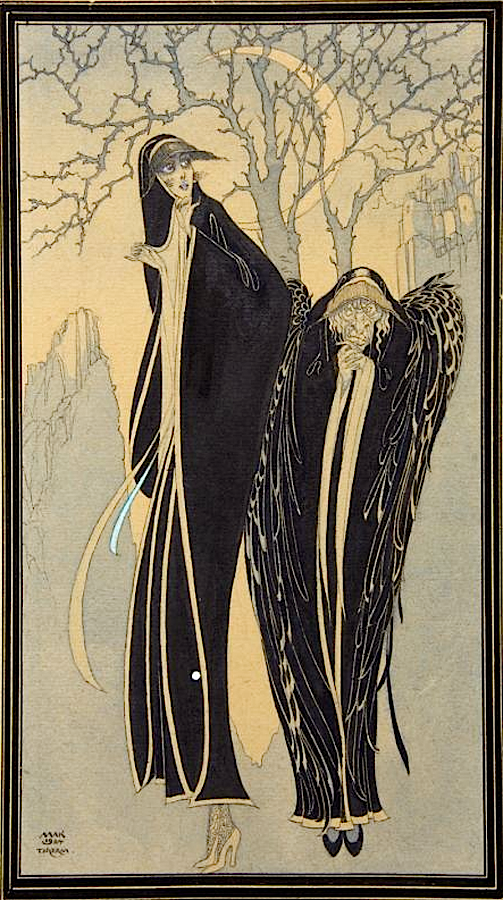
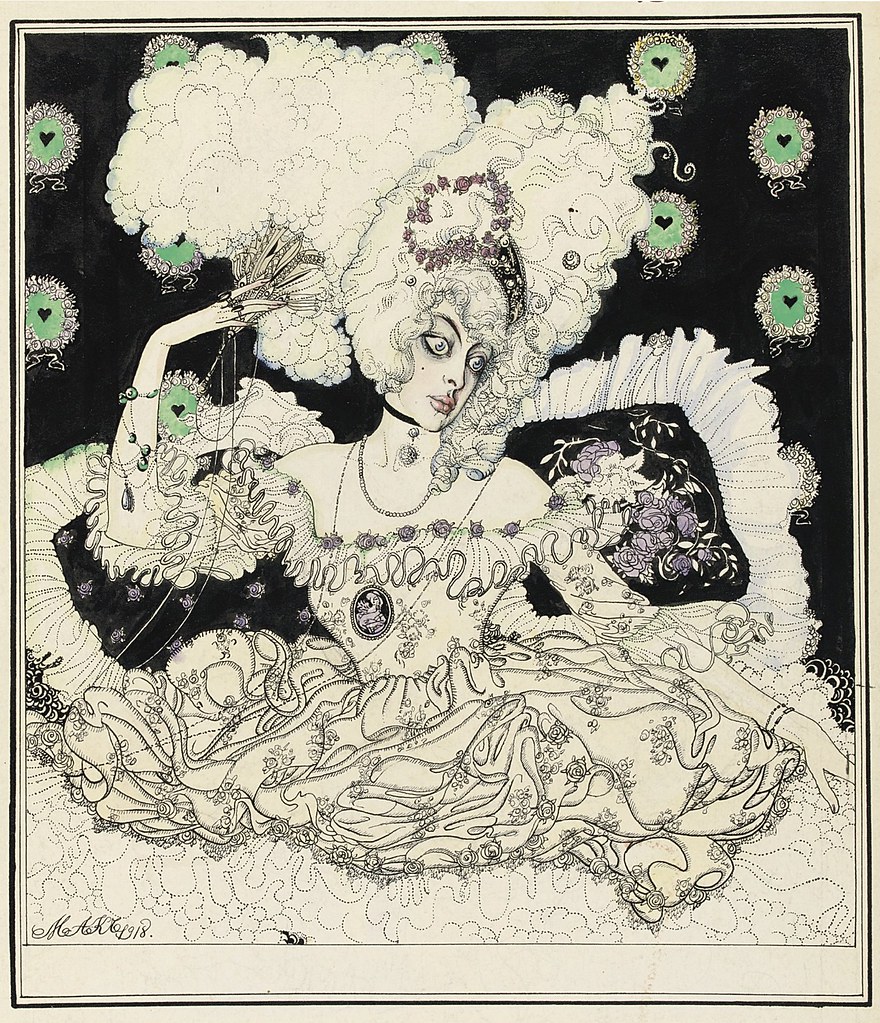
Pavel Ivanov aka Paul Mak (1891-1967)

Russian-born Pavel Petrovich Ivanov (who later changed his name to Paul Mak) is best known for his fantastical style and Middle-Eastern themes. Born to a noble Russian military family, Mak studied art at K. Iuon's studio in Moscow and illustrated for Moscow and St. Petersburg journals including Satirikon before enrolling at the Kiev Military Academy following the outbreak of World War I. He was wounded during action but by the end of the war had been promoted to the rank of Captain and served in the 89th Belomorskii Infantry Regiment. Imprisoned by the Bolsheviks in Butyrskii following the October revolution, Mak was swiftly rehabilitated and by 1920 was working as an artist for the Theatre of Revolutionary Satire in Moscow.

Mak's emigration in 1922 heralded the most exciting and creative period in his artistic career. Crossing Turkestan and Afghanistan, Mak settled in Persia, modern-day Iran, initially working as a racehorse trainer before an introduction to the Reza Shah led to his appointment as official court artist. During this period, Mak was devoted to the study of the Persian miniature, renowned for its exquisite detail and intricacy. He sought inspiration from the exoticism of Eastern tales and history and lent his stylized line to figures such as Salome, Tamberlane, and Chingis Khan. Perhaps the most fertile source for his miniatures was 'The Thousand and One Nights', a collection of tales that originated in India, Persia and Arabia.

Text from:
https://www.korshakcollection.com/paul-mak


Thursday, 21 March 2019

Liverpool Castle & Rivington Pike

Equinoxial perambulation. Starting from the Dovecote carpark, I walked along the large open paths of Lever park and down through beech woods towards Liverpool Castle and Anglezarke. From there I headed uphill through the woods and emerged on a promontory leading to Rivington Pike. Continuing along the ridge with breathtaking views of Anglezarke and out towards the Irish Sea, I took a dip into the terraced (Chinese) gardens, and ascended towards the Dovecot tower. From there, a mile or so brought me back to the car park. Fabulous walk just following my nose on familiar tracks. One thing that struck me was that despite the relative lateness of the year, the trees and bushes were shy and still only in bud, with catkins predominating over leaves. There were very few people about on this day, but those I did bump into were prepared for a long natter and to open their heart's treasures to a stranger. 


Monday, 11 March 2019

Turton & Entwistle and Wayoh Reservoirs

This is probably the best walk I know with proximity to a large town (in this case, Bolton). That said, circumnavigating both of these reservoirs is a distinctly rural experience, and particularly with Wayoh reservoir, it is possible to walk almost all the way around it without encountering a soul. Naturally, you can flex this walk and do one reservoir or the other. I have done it/them in various combinations; Turton & Entwistle only, Wayoh only, and on this occasion both. It really helps that the car park, and the fabulous real ale pub the Strawberry Duck, is centrally situated between the walks. There is even a train station with half-hourly trains. All this within a stone's throw from Bolton, and so few locals enjoying it. Like William Morris said, we sit starving amidst our gold. 


Wednesday, 27 February 2019

Wheelton Plantation

"Brinscall, about seven miles southwest of Blackburn, was a small farming community owned by the de Hoghton family, who were lords of the manor in the 16th century. When the cotton industry came to Lancashire in the 19th century, a thriving community of handloom weavers was built up in the valley area. William Christopher Wood built the present Brinscall Hall in 1876, and a calico printworks which employed a number of people but which closed in 1928. The ruins of many of these buildings are now surrounded by woodland known as Wheelton Plantation. In 1847 Liverpool Corporation bought the water rights of Withnell Moor from William Bashall Parke, a local landowner, and built Roddlesworth reservoir. The area is now owned by North West Water Authority and is part of the Anglezarke link of reservoirs and also a nature conservation area." From The Lancashire Village Book, by the Lancashire Federation of Women's Institutes (Countryside Books, 1990).

"Withnell Moor in Lancashire appears a lonely wilderness today, to be enjoyed by walkers and wildlife. But only 120 years ago, it was a thriving community and where today piles of moss-covered stones scatter the land, there once stood farms and cottages, green pastures and meadows, all thronging with families who lived, worked and played there." From Recollections of a Moorland Lad by Richard Robinson (Merlin Unwin Books, 2016). 

"In the space of little more than five square miles, there used to be nearly fifty farms, upon which hundreds of men, women and children depended. Then, almost overnight, the march of ‘progress’ robbed them of their homes and livelihoods, leaving behind a landscape frozen in time, with crumbling buildings and lonely vestiges of human habitation." From Lost Farms of Brinscall Moors, by David Clayton (Carnegie Publishing, 2011). 


Sunday, 20 January 2019

River Roddlesworth & Halliwell Fold Bridge

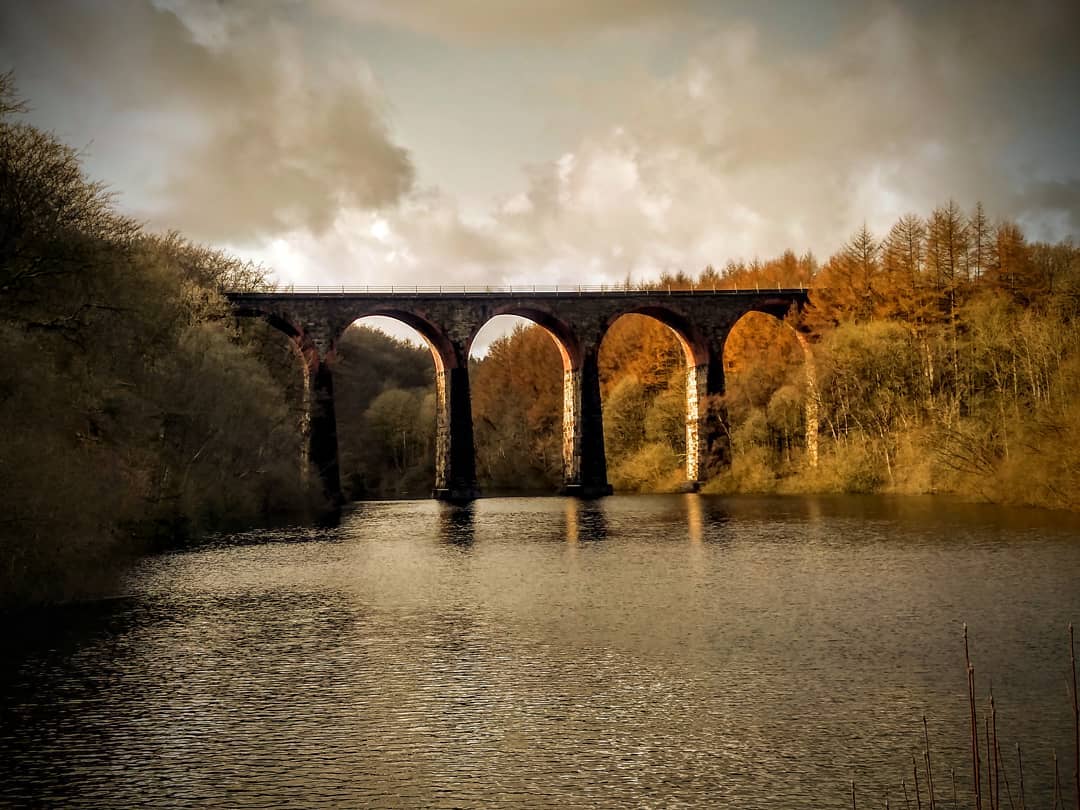
This was a quick January breezer just to get some fresh air and try to manufacture a feeble microgram of vitamin D or two. The woods were bleak yet beautiful at this time of year, with the canopy open to the heavens. I can't believe after walking in these woods as often as I have, that there is an on-off waterfall depending on what time of year you go (Halliwell Fold Scar) AND further up towards Tockholes, an abandoned/ half demolished ancient manor house in the old township of Tockholes that was largely rebuilt in the 1770's (Hollinshead Hall). Had I known about them at the time, both of these features would have been wonderful additions to our walk, but somehow you gotta roll with the punches and do what the gods have in store for you.