21st September
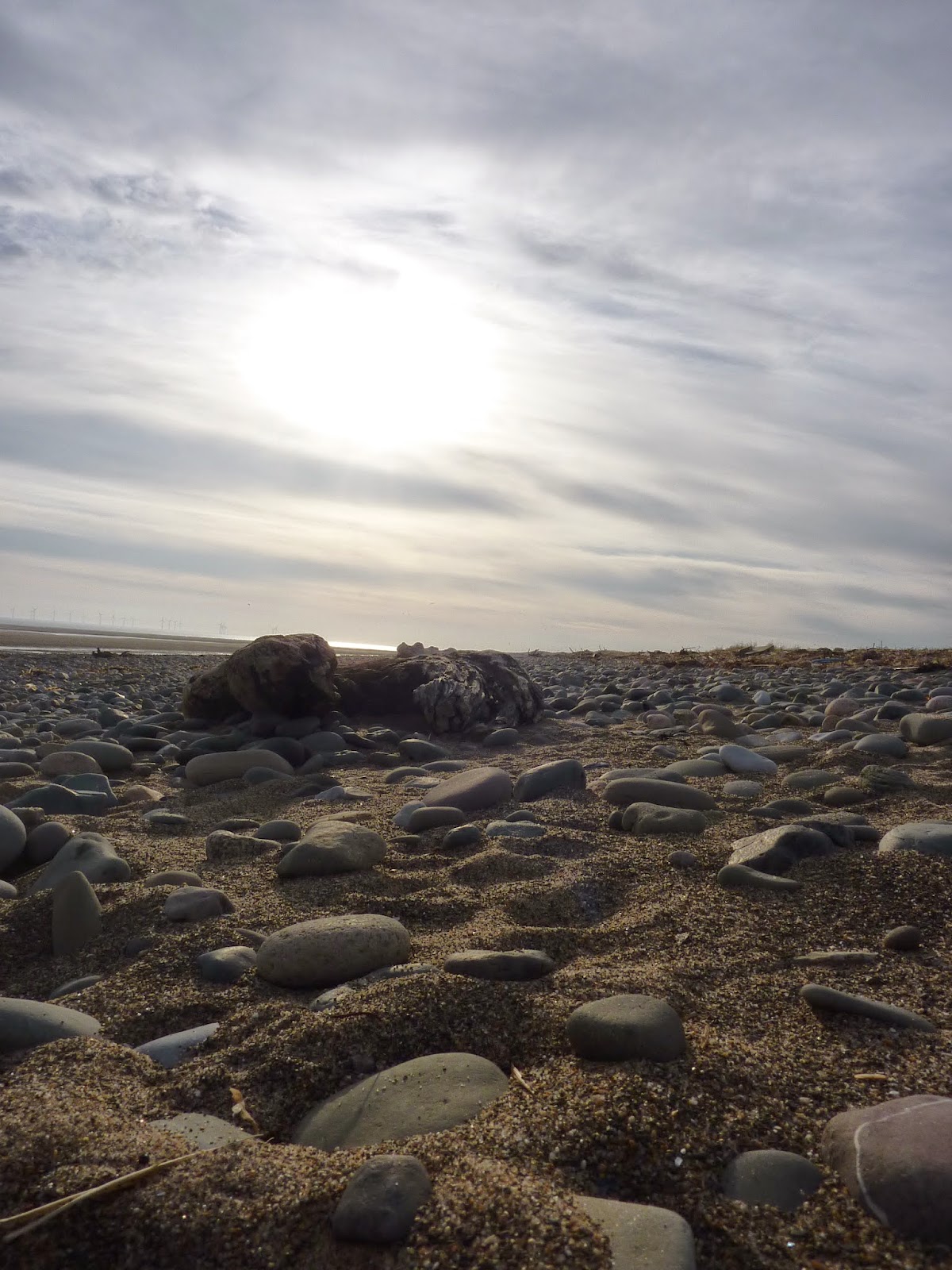
The name for the festival of the Autumn Equinox in Druidry is Alban Elfed, which means 'The Light of the Water'. The Wheel turns and the time of balance returns. Alban Elfed marks the balance of day and night before the darkness overtakes the light. It is also the time of the second harvest, usually of the fruit which has stayed on the trees and plants that have ripened under the summer sun. It is this final harvest which can take the central theme of the Alban Elfed ceremony - thanking the Earth, in her full abundance as Mother and Giver, for the great harvest, as Autumn begins.
From the Order of Bards Ovates & Druids (OBOD)
By North Utsire
Tuesday, 30 September 2014
Monday, 29 September 2014
Carl Jung: The Soul of Nature
"Through scientific understanding, our world has become dehumanised. Man feels himself isolated in the cosmos. He is no longer involved in nature and has lost his emotional participation in natural events, which hitherto had a symbolic meaning for him. Thunder is no longer the voice of a god, nor is lightning his avenging missile. No river contains a spirit, no tree makes a mans's life, no snake is the embodiment of wisdom and no mountain still harbours a great demon. Neither do things speak to him nor can he speak to things, like stones, springs, plants and animals."
~ Carl Jung ~
The Universe in a Flower
If we could see the miracle of a single flower clearly, our whole life would change.
Buddha
Buddha
By North Utsire
Chief Seattle Speech
Though captivatingly beautiful, the Chief Settle speech is
not actually authentic. Rather than issuing from the very real Chief Seattle in
1854, those moving words were written by a screenwriter in 1971.
"Chief Seattle is probably our greatest manufactured
prophet," said David Buerge, a Northwest historian. The real Chief Seattle
did give a speech in 1854, but he never said "The earth is our
mother." Nor did he say "I have seen a thousand rotting buffaloes on
the prairie, left by the white man who shot them from a passing train."
There were no bison within 600 miles of the chief's home on Puget Sound in the
Pacific Northwest, and trains to the West were years away.
How can you buy or sell the sky, the warmth of the land? The
idea is strange to us. If we do not own the freshness of the air and the
sparkle of the water, how can you buy them? Every part of the Earth is sacred
to my people. Every shining pine needle, every sandy shore, every mist in the
dark woods, every clear and humming insect is holy in the memory and experience
of my people. The sap which courses through the trees carries the memory and
experience of my people. The sap which courses through the trees carries the
memories of the red man.
The white man's dead forget the country of their birth when
they go to walk among the stars. Our dead never forget this beautiful Earth,
for it is the mother of the red man. We are part of the Earth and it is part of
us. The perfumed flowers are our sisters, the deer, the horse, the great eagle,
these are our brothers. The rocky crests, the juices in the meadows, the body
heat of the pony, and the man, all belong to the same family.
So, when the Great Chief in Washington
sends word that he wishes to buy our land, he asks much of us. The Great White
Chief sends word he will reserve us a place so that we can live comfortably to
ourselves. He will be our father and we will be his children. So we will consider
your offer to buy land. But it will not be easy. For this land is sacred to us.
This shining water that moves in streams and rivers is not
just water but the blood of our ancestors. If we sell you land, you must
remember that it is sacred blood of our ancestors. If we sell you land, you
must remember that it is sacred, and you must teach your children that it is
sacred and that each ghostly reflection in the clear water of the lakes tells
of events in the life of my people. The waters murmur is the voice of my
father's father.
The rivers of our brothers they quench our thirst. The
rivers carry our canoes and feed our children. If we sell you our land, you
must remember to teach your children that the rivers are our brothers, and
yours, and you must henceforth give the rivers the kindness that you would give
my brother. We know that the white man does not understand our ways. One
portion of land is the same to him as the next, for he is a stranger who comes
in the night and takes from the land whatever he needs. The Earth is not his
brother, but his enemy and when he has conquered it, he moves on. He leaves his
father's graves behind, and he does not care. He kidnaps the Earth from his
children, and he does not care.
His father's grave, and his children's birthright are
forgotten. He treats his mother, the Earth, and his brother, the same, as
things to be bought, plundered, sold like sheep or bright beads. His appetite
will devour the Earth and leave behind only a desert. I do not know. Our ways
are different from yours ways. The sight of your cities pains the eyes of the
red man. But perhaps it is because the red man is a savage and does not
understand.
There is no quiet place in the white man's cities. No place
to hear the unfurling of leaves in spring, or the rustle of an insect's wings.
But perhaps it is because I am a savage and do not understand. The clatter only
seems to insult the ears. And what is there to life if a man cannot hear the
lonely cry of a whippoorwill or the arguments of the frogs around a pond at
night. I am a red man and do not understand. The Indian prefers the soft sound
of the wind darting over the face of the pond, and the smell of the wind
itself, cleansed by a midday rain, or
scented with the pinon pine.
The air is precious to the red man, for all things share the
same breath - the beast, the tree, the man, they all share the same breath. The
white man does not seem to notice the air he breathes. Like a man dying for
many days, he is numb to the stench. But if we sell you our land, you must
remember that the air is precious to us, that the air shares its spirit with
all the life it supports. The wind that gave our grandfather his first breath
also receives his last sigh. And if we sell you our land, you must keep it
apart and sacred, as a place where even the white man can go to taste the wind
that is sweetened by the meadow's flowers.
So we will consider your offer to buy our land. If we decide
to accept, I will make one condition - the white man must treat the beasts of this
land as his brothers. I am a savage and do not understand any other way. I have
seen a thousand rotting buffaloes on the prairie, left by the white man who
shot them from a passing train. I am a savage and do not understand how the
smoking iron horse can be made more important than the buffalo that we kill
only to stay alive.
What is man without the beasts? If all the beasts were gone,
man would die from a great loneliness of the spirit. For whatever happens to
the beasts, soon happens to man. All things are connected. You must teach your
children that the ground beneath their feet is the ashes of our grandfathers.
So that they will respect the land, tell your children that the Earth is rich
with the lives of our kin. Teach your children what we have taught our
children, that the Earth is our mother. Whatever befalls the Earth befalls the
sons of the Earth. If men spit upon the ground, they spit upon themselves.
This we know - the Earth does not belong to man - man
belongs to the Earth. This we know. All things are connected like the blood
which unites one family. All things are connected. Whatever befalls the Earth -
befalls the sons of the Earth. Man did not weave the web of life - he is merely
a strand in it. Whatever he does to the web, he does to himself. Even the white
man, whose God walks and talks with him as friend to friend, cannot be exempt
from the common destiny. We may be brothers after all. We shall see. One thing
we know, which the white man may one day discover - Our God is the same God. You
may think now that you own Him as you wish to own our land, but you cannot. He
is the God of man, and His compassion is equal for red man and the white. The
Earth is precious to Him, and to harm the Earth is to heap contempt on its
creator. The whites too shall pass, perhaps sooner than all other tribes.
But in your perishing you will shine brightly, fired by the
strength of the God who brought you to this land and for some special purpose
gave you dominion over this land and over the red man. That destiny is a
mystery to us, for we do not understand when the buffalo are slaughtered, the
wild horses tamed, the secret corners of the forest heavy with scent of many
men, and the view of the ripe hills blotted by talking wires. Where is the
thicket? Gone. Where is the Eagle? Gone. The end of living and the beginning of
survival.
By North Utsire
By North Utsire
Rachel Carson: The Sense of Wonder
“Why should we tolerate a diet of weak poisons, a home in insipid surroundings, a circle of acquaintances who are not quite our enemies, the noise of motors with just enough relief to prevent insanity? Who would want to live in a world which is just not quite fatal?”
~ Silent Spring
“A child’s world is fresh and new and beautiful, full or wonder and excitement. It is our misfortune that for most of us that clear-eyed vision, that true instinct for what is beautiful and awe-inspiring, is dimmed and even lost before we reach adulthood. If I had influence with the good fairy who is supposed to preside over the christening of all children, I should ask that her gift to each child in the world be a sense of wonder so indestructible that it would last throughout life, as an unfailing antidote against the boredom and disenchantment of later year…the alienation from the sources of our strength.”
~ The Sense of Wonder
“To stand at the edge of the sea, to sense the ebb and flow of the tides, to feel the breath of a mist moving over a great salt marsh, to watch the flight of shore birds that have swept up and down the surf lines of the continents for untold thousands of years, to see the running of the old eels and the young shad to the sea, is to have knowledge of things that are as nearly eternal as any earthly life can be.”
~ The Sea Around Us
By North Utsire
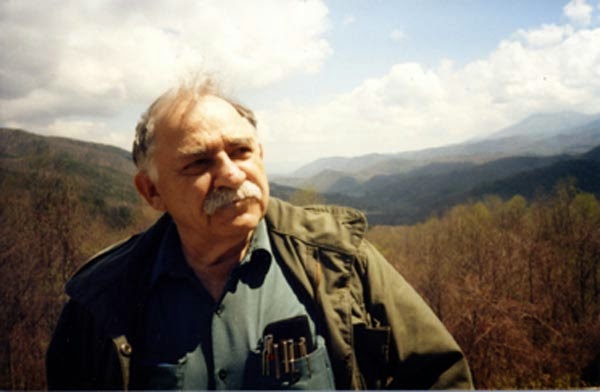
Murray Bookchin: Ecology & Revolutionary Thought
The point is that man is undoing the work of organic evolution. By creating vast urban agglomerations of concrete, metal, and glass, by overriding and undermining the complex, subtly organized ecosystems that constitute local differences in the natural world — in short, by replacing a highly complex organic environment with a simplified, inorganic one — man is disassembling the biotic pyramid that supported humanity for countless millennia. In the course of replacing the complex ecological relationships on which all advanced living things depend with more elementary relationships, man is steadily restoring the biosphere to a stage that will be able to support only simpler forms of life. If this great reversal of the evolutionary process continues, it is by no means fanciful to suppose that the preconditions for higher forms of life will be irreparably destroyed and the earth will become incapable of supporting man himself.
Lewis Herber (Murray Bookchin)
from Ecology and Revolutionary Thought
By North Utsire
Wendell Berry on Food
“The passive American consumer, sitting down to a meal of pre-prepared food, confronts inert, anonymous substances that have been processed, dyed, breaded, sauced, gravied, ground, pulped, strained, blended, prettified, and sanitized beyond resemblance to any part of any creature that ever lived. The products of nature and agriculture have been made, to all appearances, the products of industry. Both eater and eaten are thus in exile from biological reality.”
“Eating with the fullest pleasure – pleasure, that is, that does not depend on ignorance – is perhaps the profoundest enactment of our connection with the world. In this pleasure we experience our dependence and our gratitude, for we are living in a mystery, from creatures we did not make and powers we cannot comprehend.”
“A person who undertakes to grow a garden at home, by practices that will preserve rather than exploit the economy of the soil, has his mind precisely against what is wrong with us… What I am saying is that if we apply our minds directly and competently to the needs of the earth, then we will have begun to make fundamental and necessary changes in our minds. We will begin to understand and to mistrust and to change our wasteful economy, which markets not just the produce of earth, but also the earth’s ability to produce.”
“But even in the much-publicized rebellion of the young against the materialism of the affluent society, the consumer mentality is too often still intact: the standards of behavior are still those of kind and quantity, the security sought is still the security of numbers, and the chief motive is still the consumer’s anxiety that he is missing out on what is “in.” In this state of total consumerism – which is to say a state of helpless dependence on things and services and ideas and motives that we have forgotten how to provide ourselves – all meaningful contact between ourselves and the earth is broken. We do not understand the earth in terms either of what it offers us or of what it requires of us, and I think it is the rule that people inevitably destroy what they do not understand.
By North Utsire
“Eating with the fullest pleasure – pleasure, that is, that does not depend on ignorance – is perhaps the profoundest enactment of our connection with the world. In this pleasure we experience our dependence and our gratitude, for we are living in a mystery, from creatures we did not make and powers we cannot comprehend.”
“A person who undertakes to grow a garden at home, by practices that will preserve rather than exploit the economy of the soil, has his mind precisely against what is wrong with us… What I am saying is that if we apply our minds directly and competently to the needs of the earth, then we will have begun to make fundamental and necessary changes in our minds. We will begin to understand and to mistrust and to change our wasteful economy, which markets not just the produce of earth, but also the earth’s ability to produce.”
“But even in the much-publicized rebellion of the young against the materialism of the affluent society, the consumer mentality is too often still intact: the standards of behavior are still those of kind and quantity, the security sought is still the security of numbers, and the chief motive is still the consumer’s anxiety that he is missing out on what is “in.” In this state of total consumerism – which is to say a state of helpless dependence on things and services and ideas and motives that we have forgotten how to provide ourselves – all meaningful contact between ourselves and the earth is broken. We do not understand the earth in terms either of what it offers us or of what it requires of us, and I think it is the rule that people inevitably destroy what they do not understand.
from The Art of the Commonplace: The Agrarian Essays of Wendell Berry
By North Utsire
Thoreau, from Walden: Or, Life in the Woods
“We need the tonic of wildness...At the same time that we are earnest to explore and learn all things, we require that all things be mysterious and unexplorable, that land and sea be indefinitely wild, unsurveyed and unfathomed by us because unfathomable. We can never have enough of nature.”
~ Henry David Thoreau, from Walden: Or, Life in the Woods~
By North Utsire
Gandhi & The Ashram Experiment
A mere enumeration of the vows is enough to indicate that life in the ashram was austere. It was also busy. Everyone had to put in some manual work. There was a spinning and weaving department, a cowshed and a large farm. Every inmate of the ashram cleaned his own plates and washed his own clothes. There were no servants. The atmosphere was, however, not so much of a monastery but that of a large family under a kindly but exacting patriarch. Gandhi was Bapu, the father of the household, Kasturba was Ba, the mother. It was a motley group including little children and octogenarians, graduates of American and European universities and Sanskrit scholars, devout whole-hoggers, and thinly disguised sceptics. It was a human laboratory where Gandhi tested his moral and spiritual hypotheses. It was also to him what the family is to most people, a haven from the dust and din of the world. It was a family linked not by blood or property, but by allegiance to common ideals. Gandhi ruled the ashram but his authority in the ashram, as well as in the rest of the country, was moral. When things went wrong or a member of the ashram was guilty of a serious lapse, Gandhi would take the blame upon himself and atone for it by undertaking a fast.
By North Utsire
Sprouting for Health
Sprouting seeds, cereals grains, beans and nuts can be an ecological and healthful method of eating. The main sprouts I have used have been alfalfa, aduki, buckwheat, millet, broccoli, chickpeas (garbanzos) and lentils of all types. They are pretty easy to germinate (soak 12 hours, and rinse 3 times a day for 3- 4 days). I use Kilner jars and muslin cloth to facilitate the rinsing. Sprouts are a great source of proteins, live enzymes and micronutrients and add the considerable benefit of raw, live food to a diet. They can be seasoned using Japanese style sushi condiments, added to salads, soups, or to smoothies. They also reduce the cooking requirement in the diet and save on energy, cultivation costs, and are easy to store dry and transport. Watching the minute changes involved in germination has rekindled my interest in being able to develop a self sufficient habit in terms of plant propagation, and I am interested in growing some varieties mentioned above in the garden and using them in sprouting recipes.
By North Utsire
Wednesday, 6 August 2014
The Other Four Gospels of Nutrition
A little while ago I blogged The Four Gospels of Nutrition, according to me. Now I bring you The Other Four
Gospels of Nutrition. Perhaps if these were the only eight books on nutrition available to humanity, the world would be a happier, healthier, less argumentative and misleading place.
Schwarzbein Principle
by Diana Schwarzbein |
Low carb, nutrient dense diet. Focusses on metabolic healing concept. The nutritional program consists of two phases -Healing and Maintenance - which are easy to adopt into any lifestyle. Instead of shunning fat, the program advocates eating all of the good fats and proteins your body needs as well as an unlimited portion of non-starchy carbohydrates. |
The Diet Cure
by Julia Ross
|
Therapeutic approach maintaining that addressing metabolic
imbalances is key to nutritional health. Ross delivers a systematic overhaul
of appetite chemistry, illustrating eight key physical imbalances implicated
in particular health problems and get an idea of how to use the book to
correct them.
|
Prescription for Nutritional Healing, by Phyllis A. Balch
|
This has long been America's bestselling book on natural health, with nearly 6 million copies in print, and a 4th edition. Presents a comprehensive treatment of nutritional supplements and dietary approaches to banish illness. |
Nourishing Wisdom
by Marc David
|
Smallest of the four books, but largest in scope. From a
mind- body paradigm, discusses food neurosis and the current malady in the
west of believing food is just fuel to be shoveled into the body. Explores
the social, cultural, health and spiritual aspects of eating, and how to
cultivate a healthful attitude to food.
|
By North Utsire
The Weirding Stone
Artwork for a psych- folk compilation I did. Pity I can't upload the music on Blogger, but I think you get the idea of what its like anyway.
by North Utsire
Tuesday, 5 August 2014
Curved Air: The Lost Broadcasts
Great psych prog- rock band with classical and folk influences. They remind me a bit of a less hedonistic but more classical Hawkwind, or the Doors, with that tortured synth. Curved Air were one of the first rock bands after It's a Beautiful Day and The United States of America to feature a violin. Both the founders Darryl Way and Francis Monkman, were heavily influenced by the band Spirit and originally formed Sisyphus. Along came Sonja Kristina and cured them all of Sisyphus, and behold Curved Air was formed.
Label: Gonzo Multimedia
01. Vivaldi 0:00
02. It Happened Today 08:38
03. Proposiciones 13:40
04. Back Street Luv I 20:42
05. Back Street Luv II 24:38
06. Piece Of Mind 28:49
by North Utsire
Monday, 4 August 2014
Tree Lore #6: Holloway
Although I
had heard of this creative effort by Robert Macfarlane, Stanley Donwood &
Dan Richards before, it took a chance encounter with it at the Quaker Meeting
House in London to compel me to buy it. Sitting down to a coffee (which is quite
reasonable, and in spacious and agreeable surroundings, surrounded by quiet
souls and the wisdom of the shelves of contemplative books), the slender volume
had an instant tactile and visual appeal, especially on account of the dark
artwork of Stanley Donwood. Contrary to what you might think (it being London), the book is not about the
district of Holloway, but instead the ancient hedgerowed tracks- a hollow way,
a sunken path. A route that centuries of foot- fall, hoof hit, wheel- roll
& rain run have harrowed deep into bedrock. Of course such tracks are not
much use to the tarmac generation, but that adds to their overgrown appeal. Out
of character, and charmed by the endeavour, I paid full whack for the book with
some satisfaction, rather than trying to hawk it second hand.
Late that night, we cycled back up to the holloway in fierce silver rain, skidding on wet mud, raindrops showing in our headlamp beams & the eye- glow of unknown animals glinting in the hedgerows.
The eyes of creatures shine in low light because of the presence of the tapetum lucidium, the bright carpet, a mirror- like membrane of iridescent cells that sits behind the retina. Light passes first through the rod and cone cells then strikes the membrane & rebounds back through the retina towards the light source. Any available light is used twice to see with; perception is thereby doubled.
So heavy was the rain and so thick the blackness of the night, that we soon became separated, each invisible to the other & yet when we later spoke, each of us had the experience of being pursued by another who was not of our group- someone holding a bright light and following in our tracks.
We slept that night down in the depths of the Holloway. In the darkest hours of the night a rain storm came, the water falling so hard it left drill- holes in the leaf litter. Walking at dawn I found that I had left my copy of Edward Thomas’s poems unsheltered. The rain had plumped it and driven gobbets of earth & shards of leaf in between the pages.
The path, winding like silver, trickles on,
Bordered and even invaded by thinnest moss
… and the eye
Has but the road, the wood that overhangs
And underyawns it, and the path that looks
As if it led on to some legendary
Or fancied place where men have wished to go
And stay; till, sudden, it ends where the wood ends.
by North Utsire
Sunday, 3 August 2014
John Barleycorn Must Die
Corn dollies or corn mothers are a form of straw work made as part of harvest customs of Europe before mechanisation. Before Christianisation, in traditional pagan European culture it was believed that the spirit of the corn (in modern American English, "corn" would be "grain") lived amongst the crop, and that the harvest made it effectively homeless. James Frazer devotes chapters in The Golden Bough to "Corn-Mother and Corn-Maiden in Northern Europe" (chs. 45-48) and adduces European folkloric examples collected in great abundance by the folklorist Wilhelm Mannhardt. Among the customs attached to the last sheaf of the harvest were hollow shapes fashioned from the last sheaf of wheat or other cereal crops. The corn spirit would then spend the winter in this home until the "corn dolly" was ploughed into the first furrow of the new season. "Dolly" may be a corruption of "idol" or may have come directly from the Greek word eidolon (apparition).
The medieval English ballad is of the crop spirit John Barleycorn, who after being ploughed
under the ground grows up again in the spring to be harvested and
ultimately turned into homebrewed ale. And so the seasons change...
By North Utsire
Lammas Mountain Walk
Lughnasadh customs persisted widely until the 20th century, with the
event being variously named 'Garland Sunday', 'Bilberry Sunday',
'Mountain Sunday' and 'Crohm Duh
Sunday'. The custom of climbing hills and mountains at Lughnasadh has
survived in some areas, although it has been absorbed as a Christian
pilgrimage. The best known is the 'Reek Sunday' pilgrimage to the top of
Croagh Patrick on the last Sunday in July. A number of fairs are also
believed to be survivals of Lughnasadh, for example the Puck Fair.
Ushered along by benevolent sycamore sentinels and the scent of faery heather breezes, we headed up sharp ascents and undulating valleys with our tumbling feet in roots of tree knots and happy minds inspired with wind, water shores and rapier sunshine.
By North Utsire
Ushered along by benevolent sycamore sentinels and the scent of faery heather breezes, we headed up sharp ascents and undulating valleys with our tumbling feet in roots of tree knots and happy minds inspired with wind, water shores and rapier sunshine.
By North Utsire
Friday, 25 July 2014
Salma & The Snake
By North Utsire
Subscribe to:
Posts (Atom)