Thursday, 3 September 2015

Garden Centre Photography

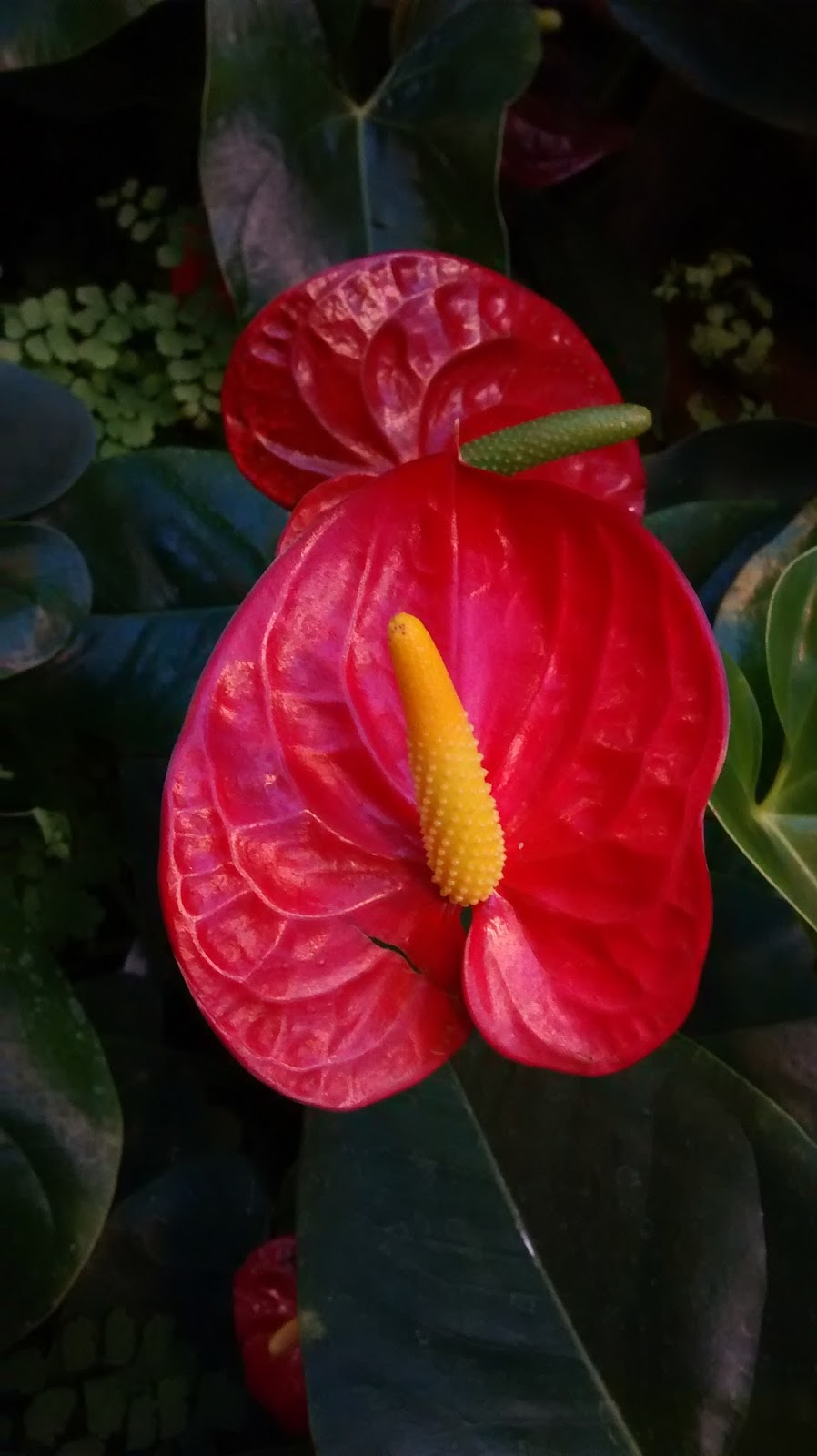
Bit niche this one, I admit. For many years I wouldn't step foot in a Garden Centre, being a bit of a nature purist and with an allergy to the ol' sell sell sell. But times change and in a whorl of Garden Glasnost I went for a jungle walk.


North Utsire

Tylwyth Teg


The name for the fairy race in Wales. means 'The Fair Folk' and Their name they are extremely attractive to look at ways , dressed in white and having al  According fair hair. ng to long some accounts, they are ruled over by the underworld god Gwynn ap Nudd, while others say that their master is the magician Gywdion. In the past, these fairies were considered dangerous and children were brought up to fear and respect them. They especially liked to steal babies or older blonde children and leave a changeling called a crimbil in their place. Their own children are said only to mature at 100 years of age, when they leave to up communities of their own. They are especially fond of singing and dancing in fairy rings, though a human should be wary of joining them. Tylwyth Teg are visible only at night, and visit human houses after dark. For this reason, country dwellers in Wales used to tidy up and stoke their fires before retiring, so that the Fair Folk could make themselves comfortable. If they were pleased they might leave a present for the family, though this would disappear at once if spoken of openly. The Fair Folk used to visit markets and exchange the money in farmers Pockets for their own, which disappeared when the farmer got home, or turned into dry leaves. The folklorist Edward Davies, writing in 1809, related the story of a lake near Brecon associated with the Tylwyth Teg.


An island rose from the middle of the lake, and it was observed that no bird would fly over it and that sometimes strains of music could be heard drifting from it over the water. In ancient times, a door in a nearby rock would open every Mayday, and those who entered would find themselves in a passage that led to the island. There, to their amazement, they discovered an enchanted garden full of the choicest fruits and flowers, inhabited by the Tylwyth Teg, whose ethereal beauty was only equalled by their courtesy and affability. Each guest would be entertained with music and told of whatever future events the fairies deemed right to tell them. The only stipulation was that the island should be considered sacred, and nothing must be taken away. One day, an ungrateful man pocketed the flower he had been presented with. This did him no good, for as soon as he touched the shore the flower c vanished and the man himself fell senseless. The Tylwyth Teg were so angry at this sacrilege that the way to the island was closed for-ever. One man tried to drain the lake to see what was there, but a horrible figure rose from the water and commanded him to stop.


From: The Element Encyclopedia of Magical Creatures by John & Caitlin Matthews
North Utsire

Brenin Enlli, King of Bardsey


The name derives from Ynys Enlli – Bardsey, at the western tip of Llyn, and the Brenin Enlli was the Bardsey King. A hundred years ago, there was a 200-strong community of fishermen and crofters on the island and as is customary on many islands, they elected their own ‘king’. The last king was Love Pritchard, here seen wearing the crown of the island.


It was tradition for the island to elect the King of Bardsey, and from 1826 onwards. He would be crowned by Baron Newborough or his representative. The crown is now kept at Merseyside Maritime Museum in Liverpool, although calls have been made for it to return to Gwynedd. The first known title holder was John Williams; his son, John Williams II, the third of the recorded kings, was deposed in 1900, and asked to leave the island as he had become an alcoholic, it is said because of the spirits that came ashore following shipwrecks in the First World War.


It is said that a cairn of empty beer casks was built on the mainland to attract John Williams as a kind of decoy- bait. He unwillingly crossed the Swnt to the Promised Land and was soon taken to the workhouse in Pwllheli where he died. At the outbreak of World War I, the last king, Love Pritchard, offered himself and the men of Bardsey Island for military service, but he was refused as he was considered too old at the age of 71. Pritchard took umbrage, and declared the island a neutral power.  This refusal did not please him and "probably" explains why Enlli remained neutral during the war and that it allegedly supported Kaiser Wilhelm II.  What a surprise, a Royal supporting German nationalism like that. In 1925, Pritchard left the island for the mainland, to seek a less laborious way of life, but died the following year. 


North Utsire

Master Yu Choob

Master Yu Choob is everywhere and yet he is nowhere. He does not have physical form and yet he is a teacher of influence and Wisdom. Seek Master Yu Choob and you will undoubtedly find. There are four 'standard' forms of Qigong generally recognised; Muscle-Tendon Change Classic (Yì Jīn Jīng), Five Animal Frolics (Wu Qin Xi), Eight Strands of the Brocade (Ba Duan Jin) and the Six Healing Sounds (Liu Zi Jue). I can get to grips with the first three forms, but making noises like hoot, squeak, squelch and belch on a regular basis doesn't appeal so I have substituted Master Chia's Iron Shirt Qigong for the Six Healing Sounds. These are quite advanced representations of the forms and there are simpler versions out there for beginners.


North Utsire

Protein Synthesis Dance


Directed in 1971 by Robert Alan Weiss for the Department of Chemistry of Stanford University and imprinted with the "free love" aura of the period, this short film continues to be shown in biology class today. It has since spawned a series of similar humorous attempts at vulgarizing protein synthesis. Narrated by Paul Berg, 1980 Nobel prize for Chemistry. If you're not interested in the sciency bit at the beginning (and I don't blame you), you can skip the vid to 3:10 to see the dance.

North Utsire

Monday, 3 August 2015

A Girl Walks Home Alone at Night (2014)


A Girl Walks Home Alone at Night is a 2014 American horror romance film directed by Ana Lily Amirpour. Tagged as "The first Iranian vampire Western", it was chosen to show in the "Next" program at the 2014 Sundance Film Festival.


The film is described as being set in "the Iranian ghost town Bad City" and depicts the doings of "a lonesome vampire" but actually the film was shot in the town of Taft in Kern County, southern California. An early short film with the same title from Amirpour screened at festivals and won Best Short Film at the Noor Iranian Film Festival. The film is based on Ana Lily Amirpour's graphic novel with the same name, which was illustrated by Michael DeWeese and edited by Ben and Jon Conrad.


The film received positive reviews from critics. Variety said in his review that "Ana Lily Amirpour's auspicious debut feature is a sly, slinky vampire romance set in an imaginary Iranian underworld". The Hollywood Reporter, praised the film by saying that "this moody and gorgeous film is finally more about atmosphere and emotions than narrative – and none the worse for it". Indiewire graded the film A− and said that it gives "the impression that you're witnessing something iconic and important unfold before you".


Boss Guardian Review
North Utsire

Hawkwind Space Ritual Poetry (1973)


The Awakening

 
Welcome to the Future

 
 Sonic Attack

Recorded live in December 1972 and released the following year, Space Ritual is an excellent document of Hawkwind's classic lineup, underscoring the group's status as space rock pioneers. As the quintessential "people's band," Hawkwind carried '60s countercultural idealism into the '70s, gigging constantly, playing wherever there was an audience, and even playing for free on five consecutive days outside the 1970 Isle of Wight Festival. The band's multimedia performances were the perfect accompaniment for exploring inner space and imagining outer space. While not concerned with rock's material trappings, Hawkwind were, ironically, among the hardest-working groups in Britain, averaging one show every three days during the year preceding these recordings.


Given all that practice, it's not surprising that the performances collected here are incredibly tight (although, reportedly, a couple of tracks were edited). Incorporating most of Doremi Fasol Latido, the show for the Space Ritual tour was conceived as a space rock opera, its blend of sci-fi electronics, mesmerizing psy-fi grooves, and heavy, earthbound jamming punctuated with spoken word interludes from astral poet Bob Calvert. Although his intergalactic musings date the album, coming across now as camp futurism, they still provide fitting atmospheric preambles to Hawkwind's astounding, mind-warping sounds. 


Calvert's manic recital of Michael Moorcock's "Sonic Attack," for instance, is an exercise in tension that subsequently explodes on the stomping "Time We Left This World Today"; with Nik Turner's otherworldly sax, Dave Brock's guitar distortion, and the earth-moving rhythm section of Simon King and Lemmy, this track offers a blueprint for the album's most potent material. Another standout is "Orgone Accumulator," ten minutes of hypnotic (Wilhelm) Reich & roll that could be the missing link between Booker T. and Stereolab. A 1973 advertisement described Space Ritual as "88 minutes of brain damage"; that characterization still holds true.


Related article on Hawkwind's Stacia here.
Good review by Culture Fusion Reviews here.
North Utsire

Free Folk: Album Artwork


North Utsire

North Indian Style Chicken Curry


This lovely fragrant spicy curry is in Anjum Anand's recipe book Indian Food Made Easy. I've been making this for years, with several variations, and found it excellent all round. The aromatic herbs (cloves, cardamom, cinnamon, ginger) all contribute to great digestion, so I make sure its got a lovely layer of oil on top, similar to Chicken Karhi, and sometimes you can make a hybrid version of this curry by using which spices you have available, or experimenting.


Whole Spices:
1 tsp Cumin Seeds
7 Cloves
7 Cardamom pods
2 sticks Cinnamon

1. Heat the ghee in a large non-stick pan.
Add the whole spices & salt and fry for about 20 seconds until aromatic, and the cumin seeds start to pop.

2. Add the onion and cook for about 10 minutes until golden brown, stirring often. Stir in the ginger and garlic and cook stirring for 40 seconds before adding the ground spices, and stir for 15 seconds. This forms a thick paste, but do not panic. Allow the oil to leach out of the paste & keep it moving.

3. Pour in the tomatoes and cook over a medium heat for about 10 minutes, until the liquid in the pan has dried off and the oil leaves the sides of the dry masala around 10 minutes.

4. Add the chicken and brown over a medium-high heat for 3-4 minutes. Add the  Coconut milk to cover the chicken (not strictly North Indian; its `my preference), bring to the boil and then cook over a low heat until the chicken is cooked through. The slower it cooks the better it tastes. This takes about 15 minutes for small joints and up to 25-30 minutes for larger ones. Check with a fork; once it is tender it is done. I usually cook on a low heat for > 1 hour.

5. Add the garam masala and coriander leaves and serve with rice or Indian flatbreads and raita or any vegetable dish.

Serves 3-4

Powdered Spices:
½ tsp Turmeric
½ tsp Chilli powder
1 Tbsp Coriander
1 Tbsp Garam Masala
1 ½  tsp Salt

Fresh Herbs:
4 cloves Garlic, chopped
1 small onion or 2-3 shallots, chopped
Handful Coriander, chopped
1 Thumb Fresh Ginger, chopped

1 whole chicken, butchered into parts
3 Tbsp Olive Oil, or Ghee
1 400ml tin Coconut Milk
4 Large Vine Tomatoes


North Utsire

Sunday, 2 August 2015

My Top 10 Beers of All Time

Having recently found out I am intolerant to gluten, it is with a certain sense of trauma I must announce my retirement from the swirling, bubbling world of beer. I can forego crumpets thick with sizzling cheese, stoneground pizza burnt slightly at the edges, and artisan breads slowly steaming after being brought out of the oven. But the real challenge has been to amputate that part of my soul which is beer. Starting with my first childhood experience of 70’s Burton Ale, now extinct, at Pontins Prestatyn, to those many beers that didn’t make it into the list below, regional, craft, microbrewed, and beckoning with headspun bravado. Ho hum, I shall have to re- educate this working class palate to the finer things in life; the grape beckons, but it is not quite the same. Below is my all time top 10, but they are not in any ranked order. After sifting through so many beer memories, and after many hours of reflection, it is quite enough to have arrived at this list. Farewell, beer. I will miss you.

Beer

Logo
Comments
Bluebird Bitter
Coniston Brewery, 3.6%


“Mine’s a pint of Bluebird”.
Saying this, you know you are in for a quality beer which is unflinchingly reliable. To the pure waters of the Coniston hills - add the finest Challenger hops and wonderfully roasted Maris Otter pale and crystal malts to create this finest of fully matured cask conditioned ales. “It is exceedingly pale (21-22 units colour), with just a hint of colour in its cheeks from the dash of crystal malt. It has a massive orange fruit aroma from the challengers, balanced by biscuity malt.”

Snowdonia Ale, 3.6%
Purple Moose Brewery


My Llangefni days working in the wretched chicken factory would have been utterly unbearable without this gently peach infused pale session beauty. It probably was the best of the lot.
Hawkshead Brewery
Bitter, 3.7%


Delicious, refreshing, and moreish, leaving no trace of a hangover; this Lakeland Ale benefits from the fresh Lakes water. I actually prefer this to the premium version, Lakeland Gold. Hawkshead say “A pale, hoppy and bitter ale: a slight elderflower aroma from Slovenian "Celeia" hops, followed by long bitterness. The hikers' favourite - the perfect thirst quencher after a day on the Fells.”

Old Golden Hen
Morland Brewery, 4.1%


Golden Hen was better in its earlier days, in bottles before it went over on to tinnies. I think they changed the formula to scale up production, and lost something in doing that. They also increased the price. Having said that, it remained drinkable, nay, swiggable, even in its neutered form & deserves its place in my top 10.

Landlord Pale Ale, 
Timothy Taylor & Co,
4.3%


This was my ‘go to’ beer for bloody ages. In the pub, in the supermarket; wherever TT was, there was I, tongue hanging out. Its younger brother, Boltmaker seemed to show promise, but for gravitas Landlord was always in a different league.

Master Brewer’s Choice Shepherd Neame, 3.8%


Already reviewed here
Woodfordes Wherry
Broadland Brewery, 3.8%


Already reviewed here
Lass Ale, 3.9%
Lass O’Gowrie Microbrewery, M/ch


Lass O’Gowrie’s epic microbrewery fizzbomb, now sadly defunct. I was privileged enough to be a regular of the Lass in its BBC heyday. There was a character (and he was a character; Guss: a bald, tattooed, bearded Viking of a man), who used to sit at the bar, chugging away on Lass Ale. Whenever he used to finish a barrel, he’d bawl loudly (nerrr ner ne nerr neh), and put his pint pot upside down on his head. If the night was getting on a bit, and you were unfortunate enough to be ordering a late Lass Ale when the barrel was coming to its end, Guss would jealously challenge you to a duel.   

Engine Vein, 4.2%
The Cheshire Brewhouse


Already reviewed here
Brenin Enlli, 4%
Cwrw Llyn Brewery


In the Llyn Peninsula, going along the B4417 roughly as you get near Nefyn, there is a diamond pub which sells this beauty of an ale on draught (Tafarn Y Fic, I looked it up for you). On a sunny day, sitting outside, breathing the pure mountain air, any Englishman feels ashamed of himself and full of yearning for living his life differently.


North Utsire

Friday, 24 July 2015

Goble goes Gitanjali


In the deep shadows of the rainy July, 
with secret steps, thou walkest, 
silent as night, eluding all watchers.


Today the morning has closed its eyes, 
heedless of the insistent calls of the loud east wind, 
and a thick veil has been drawn over the ever-wakeful blue sky.


The woodlands have hushed their songs, 
and doors are all shut at every house. 
Thou art the solitary wayfarer in this deserted street. 
Oh my only friend, my best beloved, 
the gates are open in my house- 
do not pass by like a dream.


In one salutation to thee, my God, 
let all my senses spread out 
and touch this world at thy feet.


Like a rain-cloud of July hung low with its burden 
of unshed showers let all my mind 
bend down at thy door in one salutation to thee.


Let all my songs gather together 
their diverse strains into a single current 
and flow to a sea of silence 
in one salutation to thee.


Like a flock of homesick cranes 
flying night and day back to their mountain nests 
let all my life take its voyage 
to its eternal home in one salutation to thee.


Images: Warwick Goble (1862- 1943)
Words: from Gitanjali, or Song Offerings, by Rabindranath Tagore (1861- 1941)

North Utsire